
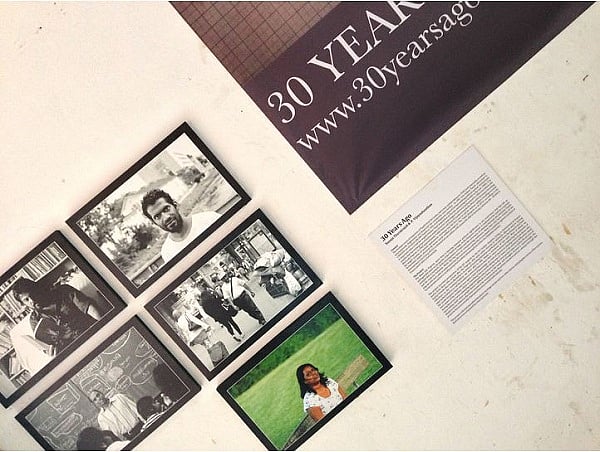
Tanuja Thurairajah is keenly aware of the power of narrative construction. As a member of the Swiss Tamil diaspora, collective renderings of history and memory are of a significance that is, perhaps, more intensely defined than elsewhere. It is this awareness of the force of popular imagination and the narratives that inform it that has guided Thurairajah's filmmaking efforts. PROJECT Belonging, co-founded by Thurairajah in 2011, documents the personal histories of Sri Lankans living in Switzerland in an attempt to furnish understanding and empathy within the Tamil community itself, as well as with the broader community. Her most recent efforts follow a similar trajectory. Presented as a part of the Groundviews curated '30 Years Ago' exhibition, Thurairajah employs the medium of film to revisit and reappraise memories of Sri Lanka's Black July Pogrom of 1983. Himal Southasian recently met with Thurairajah to discuss the 'politics of memory' in Sri Lanka and the capacity of film to contribute to a more nuanced collective consciousness.
As a filmmaker and writer you've focused on the ways in which memory can both "dispossess and malign" as well as "empower and humanise". To what extent do you think the 'politics of memory' will perform these functions in Sri Lanka's post-war context?
The focus of my work has been on stories of people; stories that are woven around personal memories of life, events, places, feelings of belonging and exclusion. These stories contribute towards an alternative ethnographic and conflict history in Sri Lanka where history as we know it is hegemonic as a result of having been politicised. Through oral narratives, we realise that remembering and forgetting builds the foundations of a 'politics of memory', which becomes alive and dynamic at particular moments in which historical events are commemorated. Providing a platform for these memories to be collated, I believe, enables a process of empowerment and humanisation to occur, particularly given the current environment of enforced silence. These stories talk about events or experiences that are intimate and at most times apolitical even though the political undercurrents are usually implicit. Therefore, they are not confrontational but powerful enough to clarify and evoke empathy. The process of collating these memories is cathartic to the storyteller and lends prominence to personal experience, instilling value and purpose. The memories become testimonies not only of survivors but also those around them who have been killed, disappeared or displaced, and in a sense provide a makeshift map of a societal fabric that has undergone vast change over the years. These narratives provide capsules of remembrance that are essential for a Sri Lanka struggling to take the first steps in a long journey towards reconciliation.
In acknowledging their vitality, can you chart the competing narratives and the memories upon which they rely?