
THEY WERE ONCE one country, but, in Bangladesh under Sheikh Hasina, Pakistan was a taboo subject. Relations had been fraught ever since Bangladesh won its independence from Pakistan in 1971, but, in the last 15 years, they reached an all-time low. Trade, the movement of people and official cooperation all ground almost to a complete halt. Pakistani diplomats in Dhaka were given the cold shoulder and two were even expelled. Meanwhile, most Pakistanis found Bangladesh off-limits for travel as an iron curtain seemed to descend.
All that has changed since Hasina fell last August, after four terms of increasingly authoritarian rule. India has become the focus of public and political resentment, while some in Bangladesh have wondered aloud about a closer relationship with Pakistan. As Bangladeshis reckon with their national identity in the aftermath of the “Monsoon Revolution” of 2024, many have started to look on Pakistan with different eyes, while state-to-state relations between the two countries are being conducted with a warmth unseen for decades.
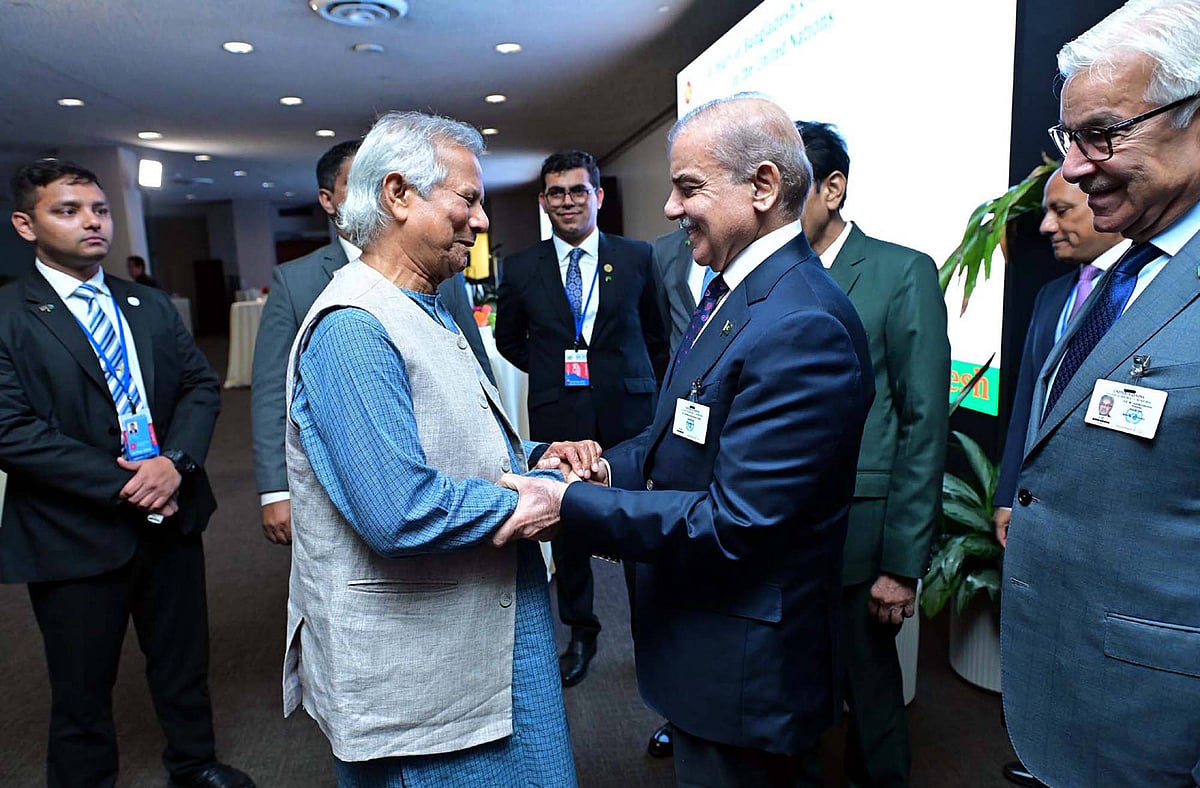
Hasina’s successor, Muhammad Yunus, the chief advisor to Bangladesh’s interim government, has met his counterpart and Pakistan’s prime minister, Shehbaz Sharif, three times in four months, while he has not met the Indian prime minister, Narendra Modi, once since taking office. Pakistan’s high commissioner in Dhaka, Syed Ahmed Maroof, has found himself much in demand. Recently, he has taken meetings with businessmen, political leaders and the interim heads of various government ministries.
Since August, Maroof told me in his office at Pakistan House in North Dhaka, he has begun to enjoy his job. We met in mid-December, as he was preparing for a concert by the Pakistani singer Rahat Fateh Ali Khan for an audience of 10,000 in Dhaka’s Army Stadium. The idea had originated with Dhaka University students, who were among the prime movers of the protests that brought Hasina down. The event was a fundraiser for injured protesters and the families of those killed in the unrest, and the singer waived his fee at the Pakistan high commission’s request.