
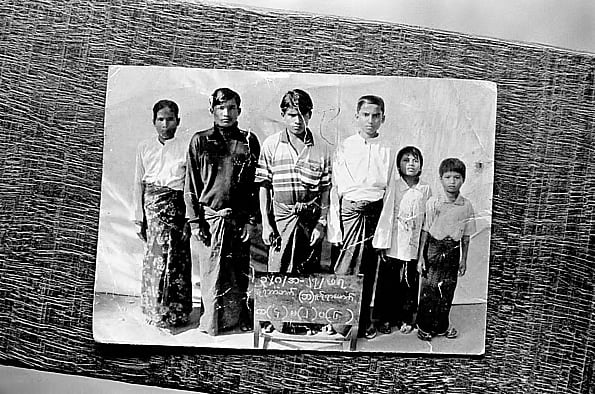
"We Rohingyas are like orchids," an 18-year-old Rohingya man called Shamsul once told me. "We are not able to grow any roots in the ground so we are left with only one way to stay alive and that is to cling on to others."
– Emma Larkin, in the foreword to Exiled to Nowhere
For nearly half a century after 1962, Burma was ruled by a military dictatorship with one of the world's worst records of human rights abuses. In that oppressive society, where the Burmese army fought numerous ethnic insurgencies, the Rohingya – Muslim settlers of the northern part of Rakhine State (formerly Arakan State), who prefer to call themselves Arakanese Muslims – have been among the most persecuted.
After the 1982 Citizenship Law passed under the rule of General Ne Win, Burmese Muslims were denied fundamental citizenship rights. They were restricted from marrying, owning land, travelling beyond their villages, or enrolling their children for formal education. Such treatment by the Burmese state has driven the Rohingya into neighbouring states like Bangladesh, where they have received only temporary shelter amidst hostility from the host community. Support from the international community has also been fragile, limited to a coterie of humanitarian workers, journalists and academics.
Greg Constantine's Exiled to Nowhere: Burma's Rohingya tells the story of the Arakanese Muslims through a series of black-and-white photographs accompanied by personal narratives, interviews and testimonies from this community. Constantine, an award-winning photojournalist who has been documenting the struggles of stateless minorities around the world for the last six years, tells this story through photographs taken over the course of eight trips to Bangladesh from 2006 to 2012.