
“The moment you utter the ‘Sh’ of Sholay, every single scene from the film rolls out before your eyes,” Dharmendra, one of the stars of the cult Hindi classic, told me in an interview for a television show marking the 35th anniversary of its release. Hema Malini, his co-star, added in mock exasperation that wherever she went, people had just one request, “‘recite that line from Sholay’– as if we have not done any other except that Sholay film.”
Fifteen years since that interview was telecast in 2010, Sholay continues to captivate Hindi film fans. Half a century after it arrived in theatres on 15 August – India’s Independence Day – in 1975, and went on to become a record-breaking box-office hit, Sholay’s dialogues, songs and characters (including some who appeared for just a few seconds or minutes), remain seared into the public consciousness, and are cited even today in conversations, films, speeches, slogans and advertisements. In that sense, Sholay is to the Hindi film industry what The Godfather trilogy and the original Star Wars trilogy are to Hollywood. Other films have surpassed Sholay’s box-office collections, but few have managed to match the magnitude and longevity of its influence on Indian popular culture.
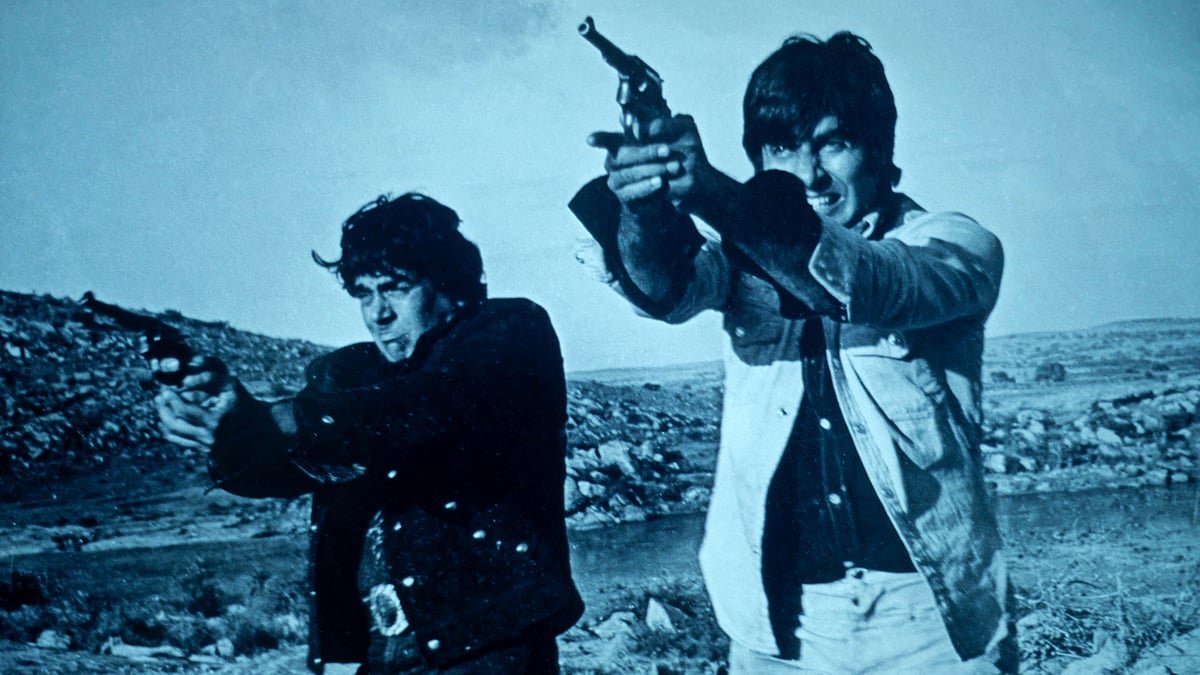
Produced by G P Sippy and directed by his son Ramesh, Sholay (“Flames”) featured an ensemble cast of established and rising superstars, with music by R D Burman and cinematography by Dwarka Divecha. The story, by the renowned screenwriting duo Salim Khan and Javed Akhtar, follows two petty crooks, Jai and Veeru, played by Amitabh Bachchan and Dharmendra respectively, who are hired by the ex-policeman Thakur Baldev Singh to avenge the massacre of his family by the dacoit Gabbar Singh. Sanjeev Kumar played Thakur, Jaya Bhaduri his widowed daughter-in-law Radha and Hema a feisty tonga driver called Basanti, while Amjad Khan was Gabbar.
When Sholay came out, 28 years had passed since the British left India. The romance and charm of freedom were waning by then, as newer generations who had not fought for it became dominant in the country’s electorate and administration. The hopes and dreams of 1947 had given way to disenchantment with the government. In this context, Salim–Javed wrote of a man who was once willing to risk his life to uphold the law but, when it costs him his family, takes the law into his own hands.