
This article is part of Dialectical, a Himal series that explores Southasia’s languages, their connections and shared histories.
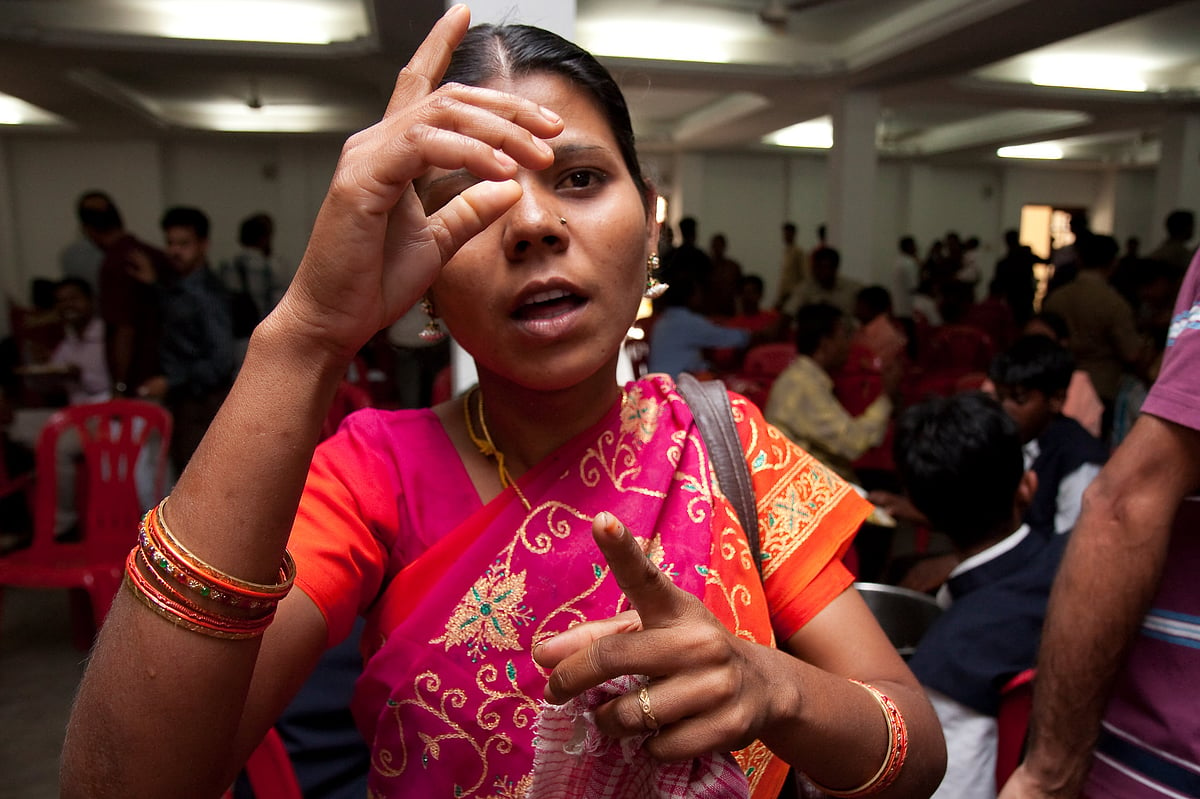
Press briefings on COVID-19 by governments around the world have brought sign language interpreters to centre stage. These occasional appearances highlighted the existing gaps in accessibility for people with impaired hearing and verbal abilities. Although many of the world's languages are spoken, some are produced by hands, face and body. Sign languages emerge naturally among deaf communities and use visual-kinaesthetic modalities. Unlike spoken languages, which are primarily perceived auditorily, sign languages are perceived visually.
Contrary to popular perception, sign language is not universal. World sign languages are as varied as spoken languages. Some of the most publicly visible sign languages of the world are American Sign Language (ASL), British Sign Language (BSL), Langue des Signes Française (LSF), Nederlandse Gebarentaal (NGT) and Chinese Sign Language (CSL). Though sign languages are often thought of as invented by hearing people and as inferior or insufficient to spoken languages, they are fully developed, rule-governed linguistic systems that have their own grammars which are not dependent on spoken languages and can express anything.
Even though the world's many sign languages are progressively becoming visible, sign languages in Southasia are still languishing in obscurity. Academic discussions around sign languages of Southasia perhaps originated in anthropological research done by colonial officers of British India. In the early 20th century, English anthropologist John Henry Hutton discovered that among the Angami Nagas living in the northeast of India, there were some sign languages used by deaf as well as hearing persons. Naga Hills are known for their rich linguistic as well as biological diversity, and sign languages may have developed to bridge the gaps of inter-village communication, hunting and gathering. This development might also be attributed to an extremely high rate of congenital deaf-mutism in Angami villages in British India.