
This article is part of Dialectical, a Himal series that explores Southasia’s languages, their connections and shared histories. Part one of this article on the languages of tea estates in Southasia can be read here.
In the late 19th century, coffee plantations first in Ceylon and then in mainland India were swept by a fungal epidemic. The disease was called coffee leaf rust, and caused the slow and inevitable death of coffee plants. British planters detected the disease by 1869 and tried in vain to counter it with fertilisers and labour-intensive cures, but these achieved only partial success. By the late 1870s, commercial coffee production in Ceylon, started by the Dutch around the 1780s, had steadily declined, and the resulting crisis was exacerbated by plummeting demand for coffee from Southasia as cheap Brazilian coffee flooded the British market and Britain entered a general economic depression. With crashing prices and yields, Ceylon’s coffee cultivation collapsed by 1886 – disastrous news for a crown colony reliant on cash-crop exports.
Building on earlier Dutch trials, the British expansion of coffee plantations – driven by European capital and South Indian labour – had transformed the Ceylonese economy by the 1850s. Coffee monoculture, and a focus on exporting only coffee, dominated from 1840 to 1875. Fuelled largely by commercial interest, in the wake of the coffee crash, the British in Ceylon looked for an alternative. They didn’t have to look far: Tea was already being cultivated in the region on a small scale.
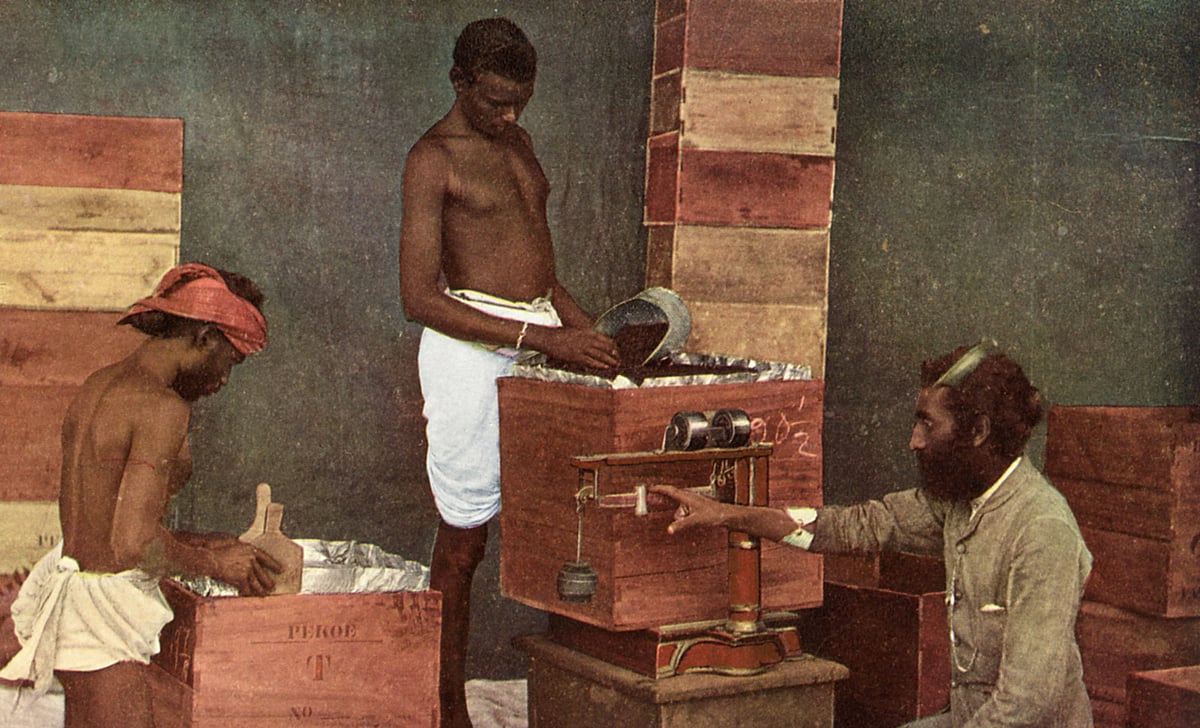
Helped by the switch in Ceylon’s main export, tea quickly replaced coffee as England’s preferred beverage, and the tea trade became the economic backbone of the British colonies by 1890. The entrenchment of tea estates in Ceylon, with their massive need for labour, led to the migration and settlement of Indian Tamil labourers in the highlands of what is now Sri Lanka.