
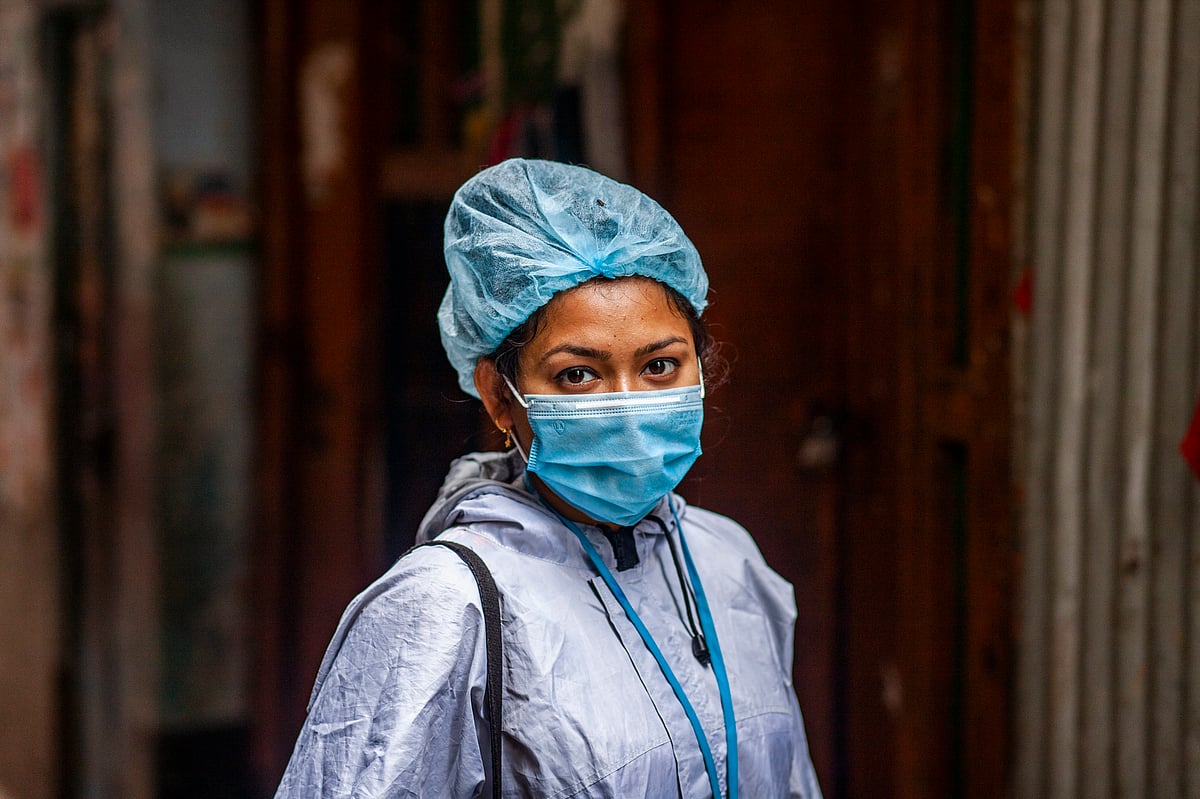
After arriving relatively late in the region, COVID-19 threatens to make Southasia another major centre of the outbreak. Cases across the region are quickly skyrocketing, from Nepal's confirmed cases now almost doubling every week to India having the fourth highest caseload in the world. Since implementing swift and strict lockdowns in March 2020, countries have eased restrictions over the last month or so, and with that has come an inevitable rise in cases.
Lockdowns were never going to be a panacea for a region like Southasia, which contains some of the world's most densely populated cities, such as Dhaka and Mumbai. The measure did slow the spread of the virus, but it didn't reverse the trend of rising cases. As the regions' wealthy and middle classes were able to close themselves off, biblical scenes of millions of impoverished, hungry migrant workers marching home to their villages filled screens around the world.
The World Health Organization continues to blast its very simple message: test, test, test. Countries in Southasia managed to respond to this urgent request only late and inadequately, given the weak public-health infrastructure and the paucity of test kits. By the end of June 2020, figures show that per day Nepal was testing 7.8 people per 1000; Pakistan 5.7; and India 6.0. While the testing rates have slowly increased, they're some of the lowest ratios in the world. Given such region-wide figures (barring exceptions like the Maldives) the number of cases being documented is very likely to be a severe underestimation. One Afghan public-health official, for example, has estimated that they may be looking at more than one million cases only in Kabul.
Ultimately, locking down the population without adequate testing appears to only have postponed the surge and lulled many into a false sense of security that Southasia will avert a crisis like the one unfolding across the United States or Brazil. Unfortunately, as the rising curves indicate, the worst is yet to come for some of the region's countries.