IN 1920, the Czech author Karel Čapek wrote a science fiction play called R.U.R. – short for Rossumovi Univerzalni Roboti, or Rossum’s Universal Robots. Credited with introducing the word “robot” to the lexicon of science fiction, R.U.R. tells the story of a factory that makes synthetic humanoid workers, who eventually overthrow and exterminate their human masters. Though Čapek was a liberal who opposed communism, it is easy to see his tale as a thinly veiled allegory for class struggle: when the robots carry out their revolution, they kill all the humans except for the factory’s engineer, because he “works with his hands like a robot.”
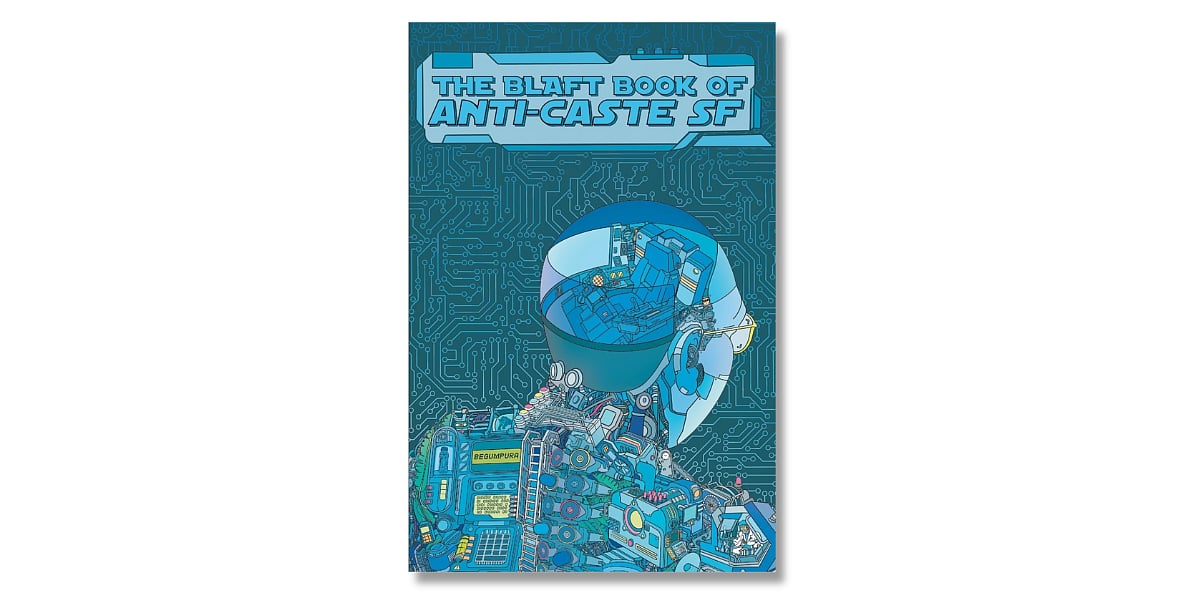
In another century, in another part of the world, the echo of R.U.R. rings out in the short story ‘Robot S/C 5’, by the famed late Gujarati writer Neerav Patel – recently reproduced in translation in The Blaft Book of Anti-Caste SF, an anthology that opens a new chapter in both speculative fiction and anti-caste fiction.
While other stories in the collection are more subtle in their message, the central allegory of Patel’s story is obvious from the very title. The robots here represent the enforced servitude of Dalits and other caste-oppressed people, and their masters are obviously dominant-caste Brahmins, as made clear by their surnames and the casteist slurs that one master hurls at his robot. The letters in the robots’ names – S/C 5, S/T 9 and OBC 103 – correspond to the categories of oppressed groups recognised by the Indian government: the Scheduled Castes, Scheduled Tribes and Other Backward Classes.