
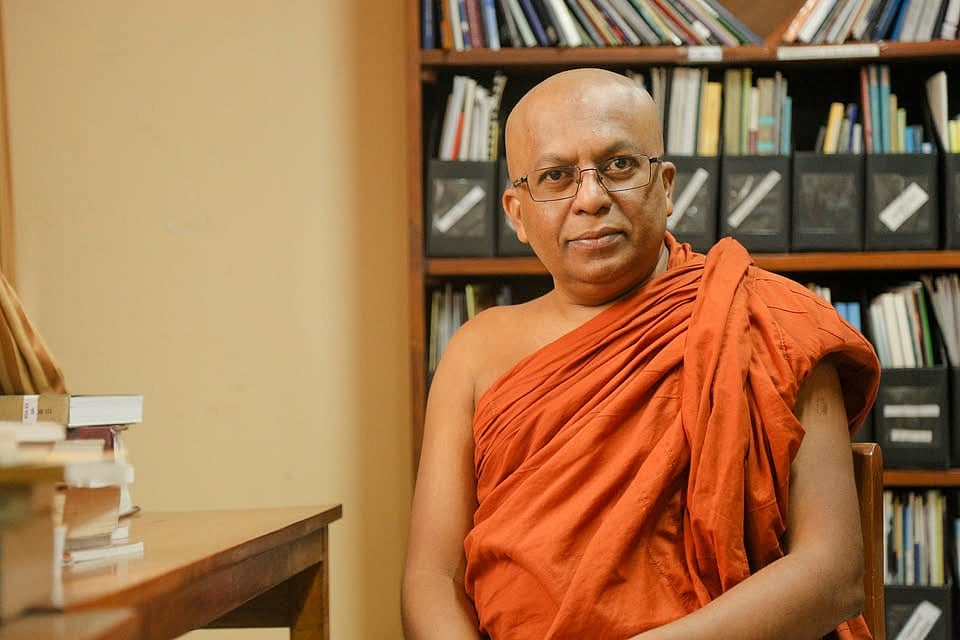
“ALMOST EVERYONE in this society is wounded,” Galkande Dhammananda said. “Reconciliation will take time.”
Dhammananda wears the flowing saffron robes characteristic of Buddhist monks in Sri Lanka, with his head shaven as per tradition. He has kind eyes framed by large, black-rimmed glasses. His face is smooth and unlined, almost ageless, with just a few worry lines on his forehead.
The most striking thing about him is his voice. It has a singsong quality yet somehow maintains a firm authority, despite how soft-spoken he is. Every word comes across as deliberate and measured. He does not seem the type to make an offhand joke or speak without thinking. In our conversations, it was clear that he is quite conscious of how his words may be perceived.
A Buddhist monk talking about post-war reconciliation is not a common thing in Sri Lanka, where monks have increasingly become synonymous with Sinhala-Buddhist nationalism and anti-minority rhetoric. Dhammananda is a rare exception – and perhaps the most prominent one – to this pattern.