
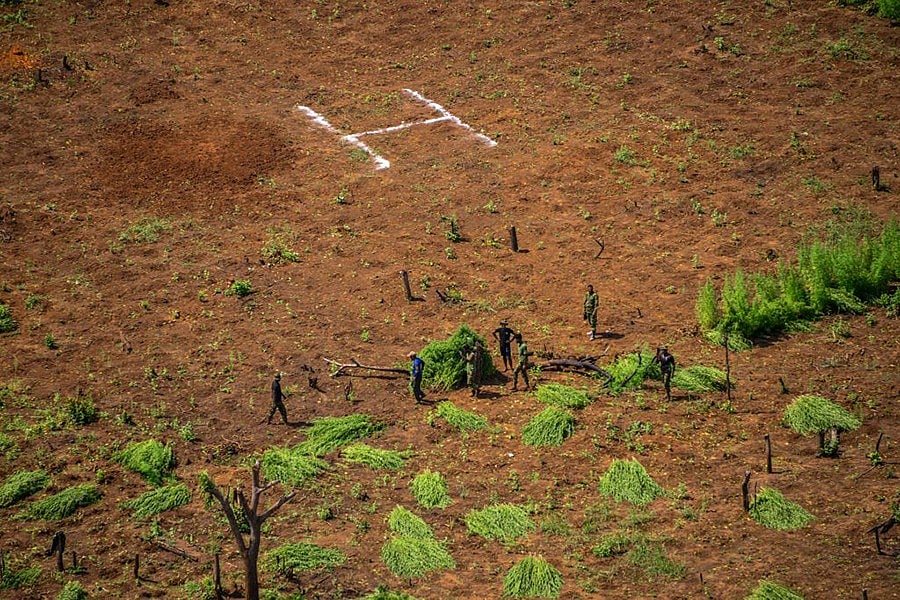
As Sri Lanka struggles with its worst economic crisis since its Independence, policymakers are increasingly focusing on diversifying the country's export industries to bring in much-needed foreign exchange, to purchase essentials such as fuel and medicines. Within this context, presenting the budget for the year 2023, President Ranil Wickremesinghe announced the appointment of an expert committee to examine the possibilities of producing cannabis – locally referred to as kansa or ganja – for export purposes.
This echoes Sri Lanka's state minister of tourism, Diana Gamage, who remains a strong advocate for legalisation and claims it will help the economy. She has earlier promised to bring in investments worth USD 2 billion for the cannabis plantation sector.
The state minister of indigenous medicines, Sisira Jayakody, in an interview stated that the expert committee has made progress and that the final draft of the legal amendments required to make cannabis available for ayurvedic exports has already been sent to the attorney general's department. "Following the recommendations from the Attorney General, we hope to send it to the Cabinet of Ministers for approval. Once Parliament also approves, we can start this work," Jayakody said. He further said that although both local and foreign investors had expressed their interest in cannabis cultivation in Sri Lanka, the government was yet to begin lengthier discussions with them due to legal barriers.
Sri Lanka remains strict on the use of cannabis for recreational and medicinal purposes, despite many tourist hotspots being popular havens for the consumption of cannabis and related products. While cannabis has been legalised in many countries, its cultivation and export remain controversial due to its history as an illegal drug and its potential for misuse. Further, exporting cannabis from Sri Lanka would require navigating a complex legal landscape and establishing proper regulatory frameworks to ensure compliance with both domestic and international laws. Additionally, the cultural attitudes towards drugs in Sri Lanka may pose challenges for the commercial cultivation of cannabis. Its association with illegal drugs will also make gaining acceptance for commercial cultivation difficult. Moreover, establishing a "profitable" cannabis industry in Sri Lanka will require significant investment in infrastructure, research and development, and regulatory frameworks. This includes setting up proper growing and processing facilities, implementing quality-control measures and developing a robust supply chain to ensure that products meet international standards., It is essential to examine these questions alongside the economic viability of exporting cannabis from Sri Lanka thoroughly.