
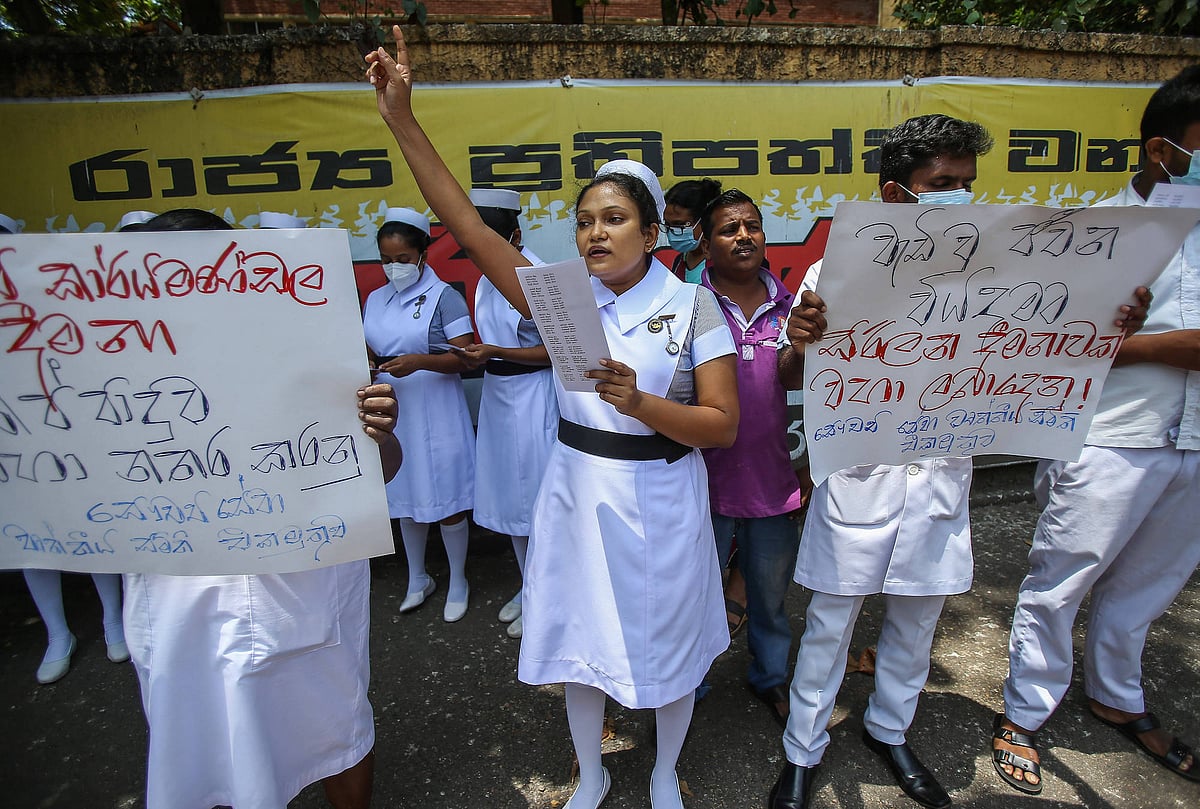
Last November, Keheliya Rambukwella, Sri Lanka's minister of health, said in parliament that healthcare workers migrating for overseas jobs without proper approval would be blacklisted and have their medical licences cancelled. This statement received intense backlash from Sri Lankan trade unions in the health sector. The Association of Medical Specialists issued a statement: "AMS considers the Minister's statements as a serious breach of the professional dignity of Sri Lankan medical specialists and their fundamental rights." The Government Medical Officers' Association (GMOA) also identified the minister's statements as a gross violation of workers' rights. "We need to introduce regulations to allow foreign doctors to come and work in Sri Lanka", subsequent statements by the minister Ramesh Pathirana led to further outrage among healthcare workers. It was against this backdrop that the ministry of health recently appointed a committee to look into the grievances of healthcare workers who are migrating to other countries.
The economic crisis of 2022 had a severe impact on Sri Lanka's strained healthcare system, which had already been grappling with the challenges of the Covid-19 pandemic. Stock-out of essential medicines and consumables, power cuts, fuel shortages and political issues challenged the efficient delivery of health services. Healthcare workers had to endure the brunt of this as they had to manage the increased demand for health with ever-dwindling resources. The personal and family lives of healthcare workers were also affected by high inflation, salary cuts, tariff hikes and other austerity measures imposed during this period. They also had to face serious discrimination during the pandemic and the economic crisis. On top of this were preexisting service and administrative issues that have been eroding the job satisfaction of healthcare workers over the years. In this context, an increasing trend of outward migration among healthcare workers in Sri Lanka comes as no surprise.
The wave
According to the 2020 Annual Health Bulletin, Sri Lanka's health workforce comprises 150,273 healthcare workers, with 2730 medical specialists, 21,450 doctors, 1564 dentists, 46,385 nurses, 8525 midwives and other allied health workers including lab technicians, radiographers, therapists and medical attendants. The quality and commitment of these healthcare workers has been the main factor behind Sri Lanka's remarkable achievements in public health, recognised both in the region and in the world. For these same reasons, they are in high demand in the international healthcare market and their migration for overseas jobs has been happening slowly but steadily over the last few decades. A study conducted in 2012 found out that 11 percent of the country's medical specialists migrated between 1980 and 2009.