
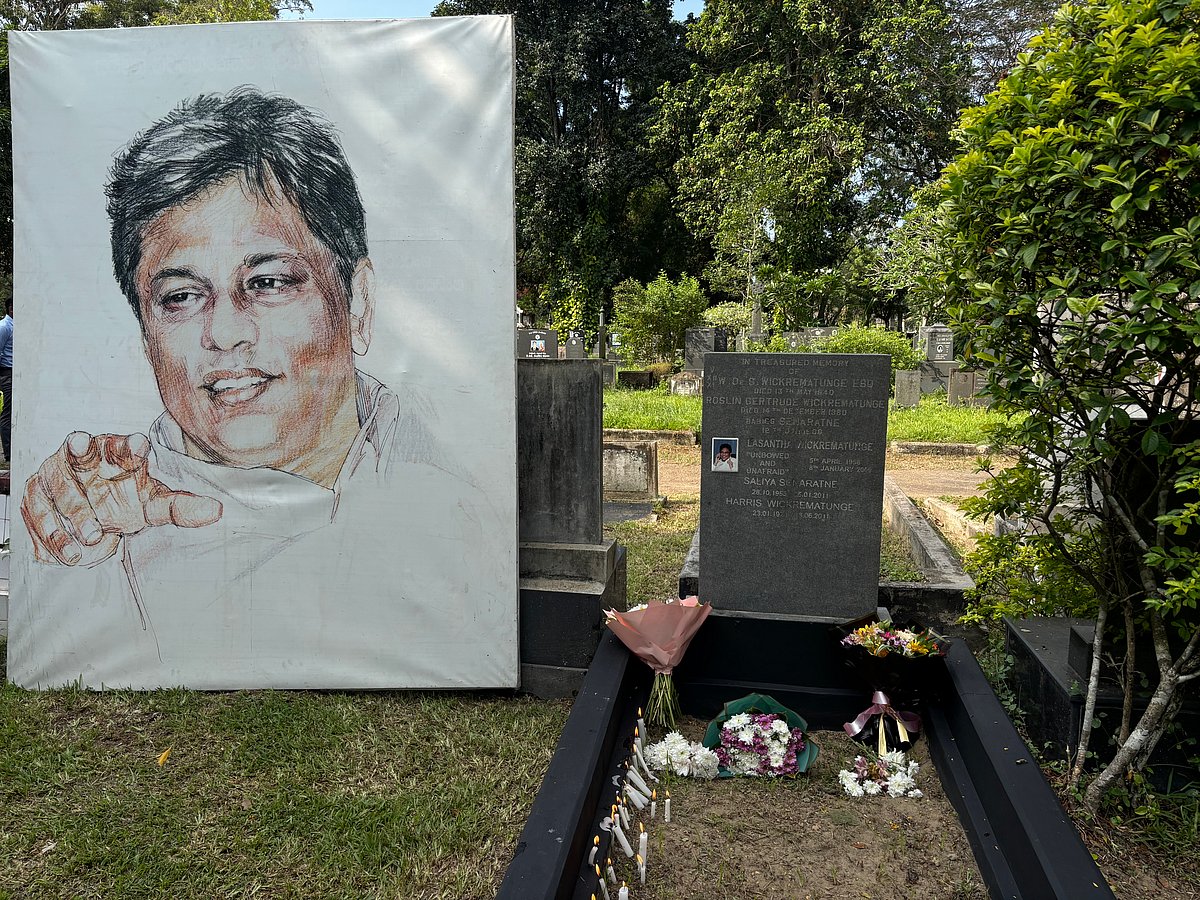
ON THE MORNING of 8 January 2009, Lasantha Wickrematunge, my uncle and the editor of the Sunday Leader, was on his way to work when he noticed black-clad men on motorcycles following him. He had cause to be alarmed, having received death threats – including one just weeks before, scrawled in red ink, which warned, “If you write, you will be killed.” Wickrematunge made several calls, including to family and friends, but ultimately decided to continue the drive to the office of his weekly newspaper.
As a family, we have mentally retraced that journey many times, wondering if there was something he could have done that would have prevented what happened next. Around the corner from the newspaper’s office, on Templars Road in the Colombo suburb of Mount Lavinia, the motorcyclists forced Lasantha’s vehicle off the road near a primary school. One of them delivered what would prove to be a fatal wound. Onlookers rushed Lasantha to Colombo South Teaching Hospital, but it was too late.
In the aftermath of my uncle’s murder, one image was transmitted over and over again on television news channels – that of his car with a single, perfectly round hole in the wind screen, a spiderweb of cracks surrounding it. When a judicial medical officer wrote that Lasantha had been killed with a firearm, no one questioned it, even though there were no shell casings found at the crime scene, nor any bullets, and notes from the emergency surgeon who tended to him said that his wounds had not been caused by bullets.
From the beginning, the investigation by the Sri Lankan government, then headed by Mahinda Rajapaksa, was flawed and beset by delays. Lasantha travelled everywhere with phone firmly clamped to ear and a notebook that contained jottings from interviews, often detailing corruption at the highest levels. It was soon discovered that both his notebook and phone had disappeared. Later, it was found that his phone had been stolen. What happened to the notebook was more mysterious, particularly as the police had collected it from the crime scene. The officer-in-charge of crimes at the Mount Lavinia police, Tissa Sugathapala, made a two-page log entry about the contents of the notebook, which included two vehicle license-plate numbers scrawled on the front and back pages. Sugathapala then handed the notebook over to the deputy inspector general Prasanna Nanayakkara, who said he would hand it over to the inspector general of police. After that, the notebook disappeared.