
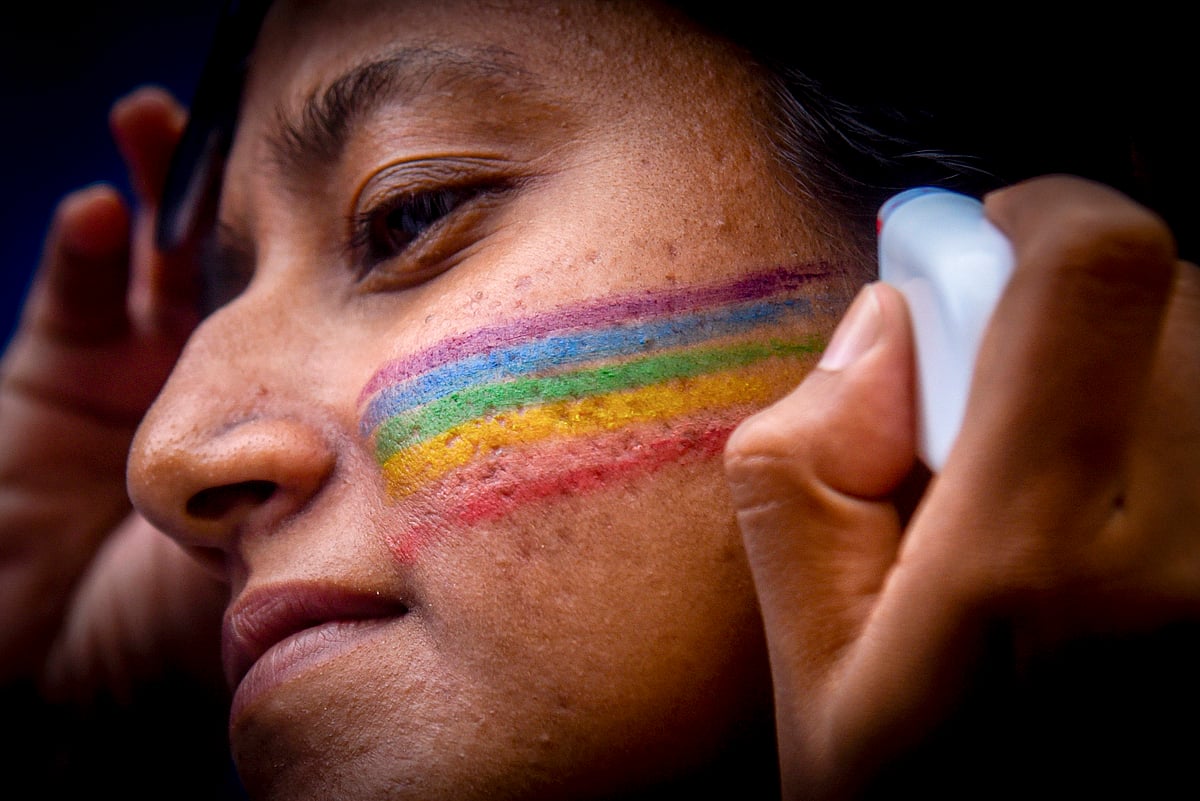
At 21 years old, in 1999, Upeksha Thabrew was evicted from her house because her family found out about her sexuality. Thabrew’s family were traditional Sinhala Buddhists, with a conservative stance on LGBTIQA+ people. Such reactions are the norm in Sri Lanka, where same-sex relationships remain stigmatised and have yet to be decriminalised.
Members of the LGBTIQA+ community often have to lean on each other for support due to the threat of eviction from their homes, discrimination by society and insubstantial social protection. In Thabrew’s case, it was Sherman de Rose, a pioneering activist from the Sri Lankan queer community and the founder of Companion on a Journey (COJ), who helped her find a room to rent. While COJ, a queer support group founded in 1995, was one of the first spaces for queer activism in the country, it focused on people of masculine identities, such as homosexual men, bisexual men and nachchi – an indigenous queer identity. In 1999, a lesbian couple from Kalutara in southern Sri Lanka took their lives because of the harassment and discrimination they faced from their families. This sparked debates within COJ about whether the group was equipped to support queer women.
“We started the Women’s Support Group (WSG) in 1999 with Companion on a Journey, as their women’s wing,” Thabrew, a co-founder of the WSG, told me. Thabrew is now 46 years old, based in New York and employed as a chef. She and a number of other activists set up WSG in COJ’s garage. The collective received mentorship from the feminist activist Sunila Abeysekera, whom they fondly called Sunila akka – “big sister”. The WSG had an intersectional stance and supported lesbians, bisexuals, intersex people and transgender men. “I realised that I had a social responsibility to change the situation for other people in my community,” Thabrew said.
Also read: Vagrant voices