“LISTEN TO THE SONG,” was my mother’s advice on how to figure out who had won an election in Sri Lanka. This was way before the internet, back when Sri Lanka only had state-controlled television, radio and print outlets as news sources. The power any ruling party had over them was absolute. A seasoned election-watcher, she knew through experience that radio producers had an ingenious method to side-step party messaging. They had certain song sets for each political party, and the songs aired as election results trickled in indicating who the forerunners were.
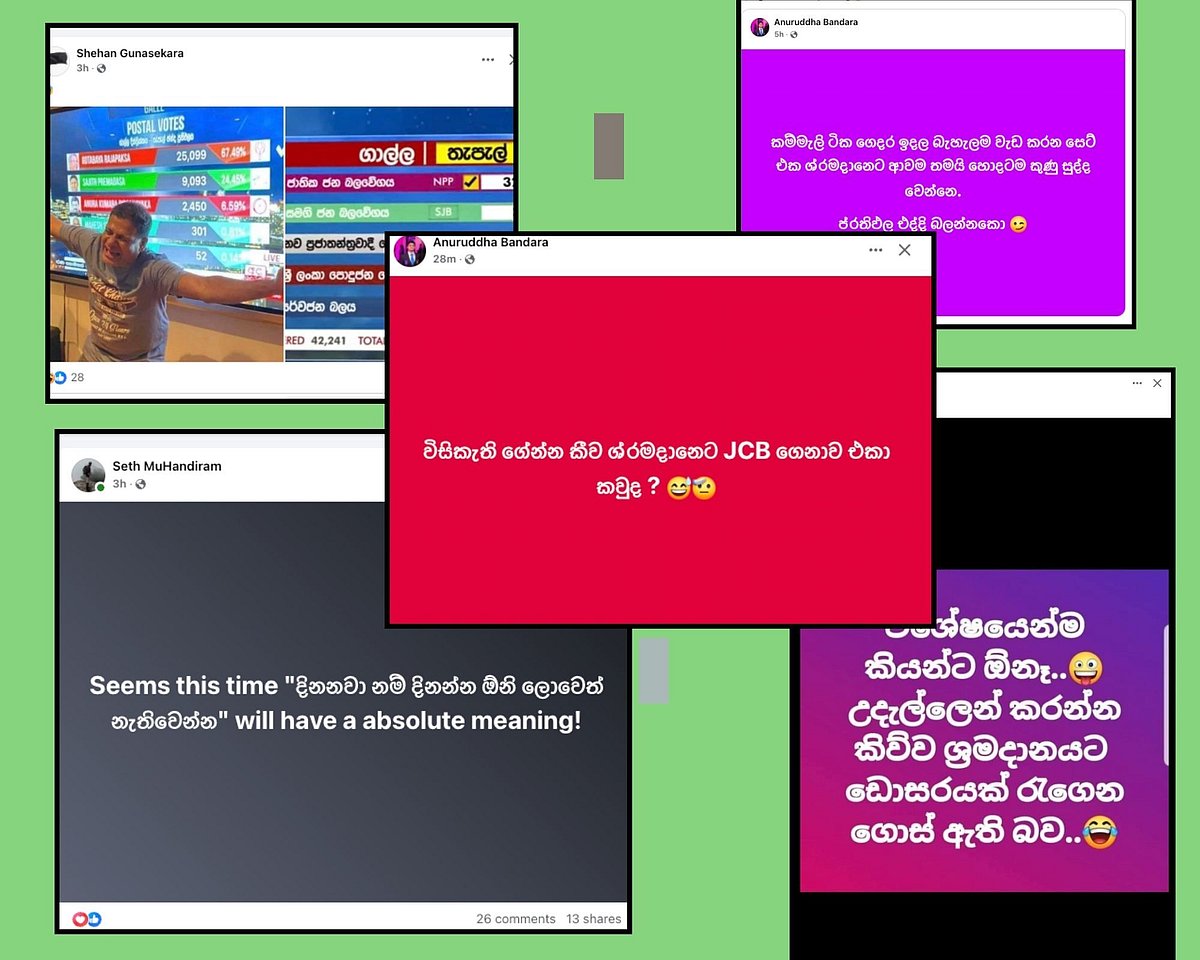
On 14 November, the day of Sri Lankan’s parliamentary election, the same work was done not by songs but something more contemporary – memes. Across social media, these gave the best indication that the nation had voted overwhelmingly for the leftist National People’s Power (NPP), and rejected the country’s traditional political powers. One meme juxtaposed the results of the postal vote in Galle district from 2024 and 2019 – when Gotabaya Rajapaksa, the now reviled former president, won power. In a refreshing change, the bulk of the content online was devoid of pretentious political punditry, and most posts were laced with that very Sri Lankan trait of dark humour.
This was a symbol of how memes and social media had seemingly overtaken traditional media outlets as the public’s main source of information on the election. Just as Sri Lankans have jettisoned the corrupt old political guard in the recent parliamentary election – and in the presidential election in September, won by the NPP’s Anura Kumara Dissanayake – they are also close to kicking the country’s traditional media off its once lofty perch.