
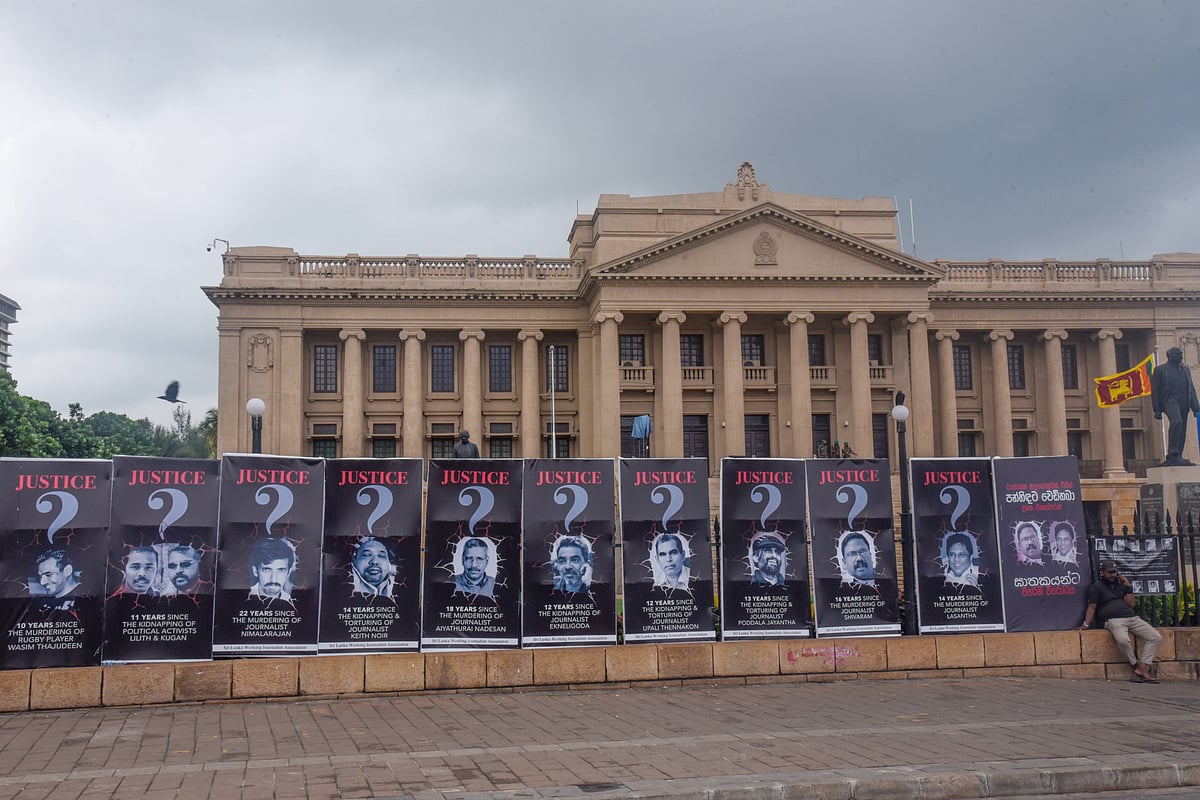
In Sri Lanka, where decades of ethnic conflict have left deep scars, some journalists dared to tell stories that others feared to voice. Nimalarajan Mylvaganam, considered to be one of the few independent voices from the war-torn Jaffna peninsula in the North of Sri Lanka at the height of the country’s decades-long civil war, was one of them. He reported for various news organisations, including the BBC’s Sinhala (Sandeshaya) and Tamil (Tamilosai) services, the Sinhala-language Ravaya weekly and the Virakesari newspaper in Tamil. In addition to covering atrocities during the civil war, he reported on sensitive topics such as paramilitary activities and election violence. But his bravery came at a cost.
On 19 October 2000, gunmen silenced his reporting with bullets. Nimalarajan was 39 years old. His assassination underscored the perilous climate for journalists during Sri Lanka’s civil war – and left his family and the journalism community in Sri Lanka grappling with questions of justice and accountability.
Nearly 25 years later, his sister Nimalarani Mylvaganam clings to hope that a new government will finally act to break the cycle of impunity for crimes against journalists.
GROWING UP IN COLOMBO in the early 1970s, Nimalarani loved sitting on her brother’s lap. Morning, afternoon or evening, it was her favourite seat – a memory she treasured until she left Sri Lanka decades later. Her brother would hold her close, telling her stories as she perched there.