
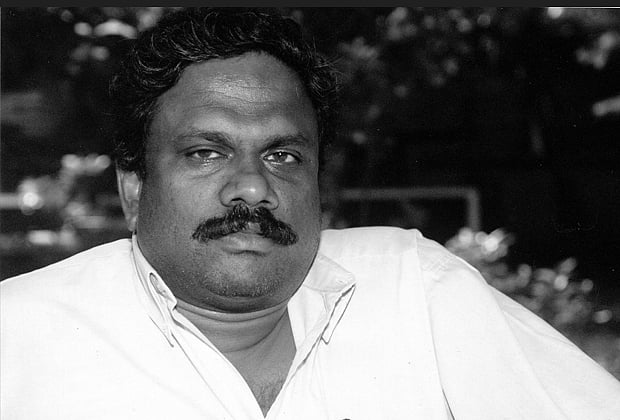
This story is published in collaboration with the Free Media Movement of Sri Lanka, part of a series for Black January, which commemorates crimes against Sri Lanka's journalists. It has been translated and edited from Tamil, with updates on Dharmeratnam Sivaram’s case.
On 28 April 2025, journalists from the Jaffna Press Club held a discussion and commemoration event in memory of Dharmeratnam Sivaram, better known as ‘Taraki’, in which they highlighted the disproportionate targeting of Tamil journalists and media workers for their reporting, and called upon the Sri Lankan government to expedite investigations into his killing. A similar event was held in Colombo on 5 May. During the Jaffna gathering, journalists recalled that in October 2024, the Public Security Minister called to expedite investigations into several open cases, including Sivaram’s case. In January 2025, after the election of the National People’s Power government, the Cabinet Spokesperson Nalinda Jayatissa also said that the Criminal Investigation Department was re-opening investigations into the killings and disappearances of several journalists, including Sivaram. The minister also said that the government was ready to take necessary measures to protect the personal safety and freedom of all journalists in the country. Yet this is cold comfort to Sivaram’s family, given that 20 years later, there has been little progress in his case.
Sivaram was abducted on 28 April 2005 at 10.30 pm in front of Bambalapitiya police station in Colombo. Police found his body four hours later near the Kimbula-Ela junction, close to the banks of the Diyawanna Oya (lake), and just 500 metres from the parliament building. An inquest concluded that he died of gunshot wounds sometime between 12.30 and 1.00 am on 29 April. Sivaram’s abduction and murder sent shock waves throughout Sri Lanka and overseas. When marking World Press Freedom Day a few days later in Senegal, the UNESCO Director General Koïchiro Matsuura called Sivaram’s death a “shameful crime”.
Sivaram was born on 11 August 1959 in Batticaloa to Maheswariamma and Puvirajakeerthi Dharmaretnam, an upper-middle class family with significant landholdings in the Eastern Province. He completed his primary education at St Michael’s College in Batticaloa and later moved to Pembroke and Aquinas College in Colombo. An avid reader since childhood, Sivaram pioneered the formation of the Batticaloa Readers’ Circle in 1980.