
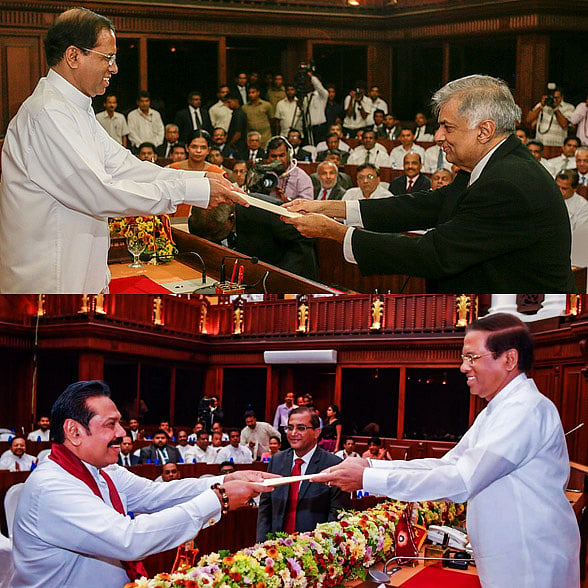
Sri Lanka faces an unprecedented constitutional and political crisis following President Maithripala Sirisena's move to dismiss Prime Minister Ranil Wickremesinghe and appoint former President Mahinda Rajapaksa in his stead on 26 October 2018, which has been challenged by Wickremesinghe as being illegal.
What explains these sudden political developments, which unseated the political party that had the largest number of seats and commanded majority support in the Parliament? What is the constitutional status of the president's prime ministerial dismissal and appointment? And what should we expect in the next few days in Sri Lankan politics?
Unlikely alliance
The government was constituted as an alliance between the Wickremesinghe-led United National Party (UNP) and its partner political parties, who together have 107 out of the 225 seats in the Parliament, and the Sirisena-led faction of Sri Lanka Freedom Party (SLFP) and its partners which have 40 seats.