
IN FEBRUARY this year, I could hardly believe it when I heard that more bodies had been discovered during construction work near Chemmani, in Jaffna district in Sri Lanka’s North. Observing exhumations there in 1999 on behalf of Amnesty International had been one of the most searing experiences of my working life. Even now, a quarter of a century later, I often think back to that time – to the families of the disappeared present there, clinging to hopes for truth, justice and reparations, only to have them cruelly denied by the administrations in power then and since.
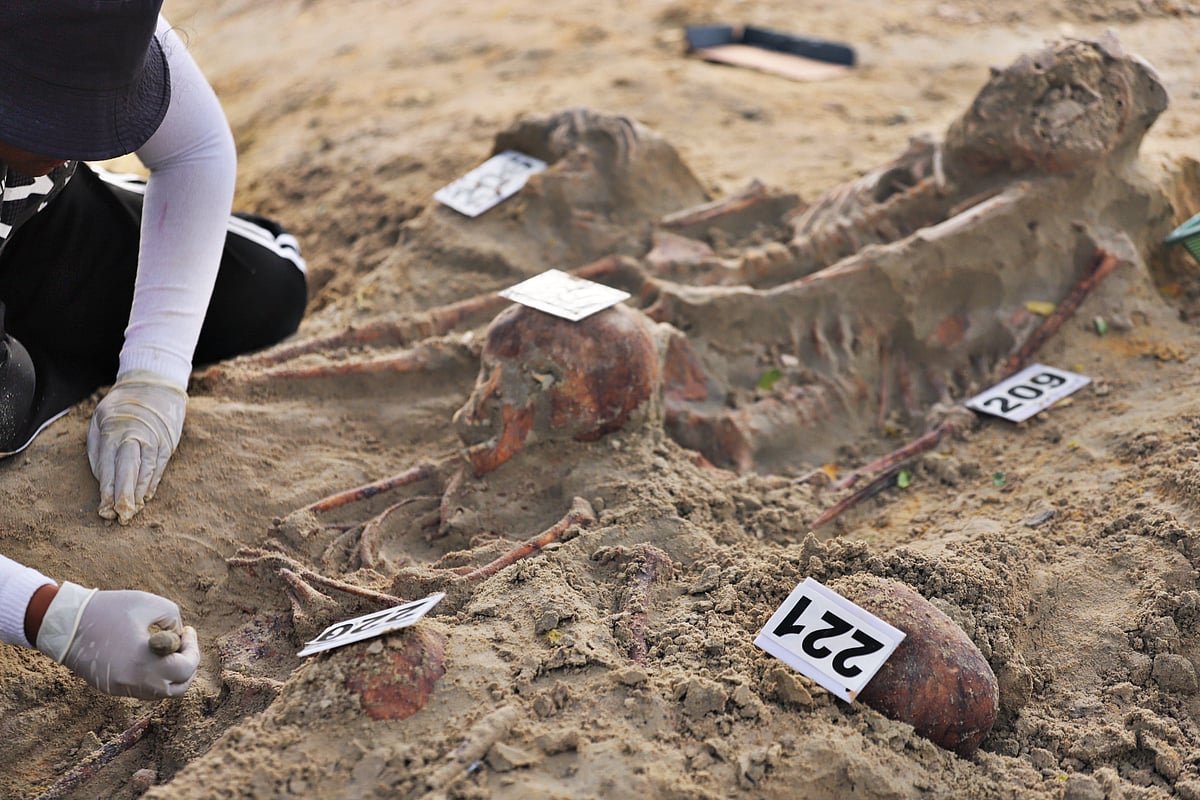
The current probe, which began in May 2025 after construction workers preparing to build a Hindu crematorium stumbled upon human bones, is a stark reminder of Sri Lanka’s unresolved past. The Jaffna Magistrate Court promptly ordered excavation and further investigation. Found in Sri Lanka’s former war zone, the mass graves have brought the country’s troubled history back into focus 16 years after the civil war ended. For the country’s Tamils, who have long demanded accountability for war crimes, atrocities and human-rights violations, the site has renewed apprehensions over the real prospects for justice.
So far, around 240 skeletal remains have been recovered by a team of experts – including a senior archaeologist assisted by students from the University of Jaffna, and Judicial Medical Officers specialising in forensic pathology and anthropology. Visiting the site in June 2025, the UN High Commissioner for Human Rights, Volker Türk, described Chemmani as “a compelling reminder that the past haunts the lives of many in Sri Lanka,” underscoring the ongoing weight of these discoveries.
Despite the gravity of the site and its past, the state’s commitment to the investigation has been uneven. Reports of delays and interruptions, coupled with the stop-start nature of the excavations, raise serious concerns about the political will and credibility of the current administration, under president Anura Kumara Dissanayake, to pursue the investigation and see justice served.