
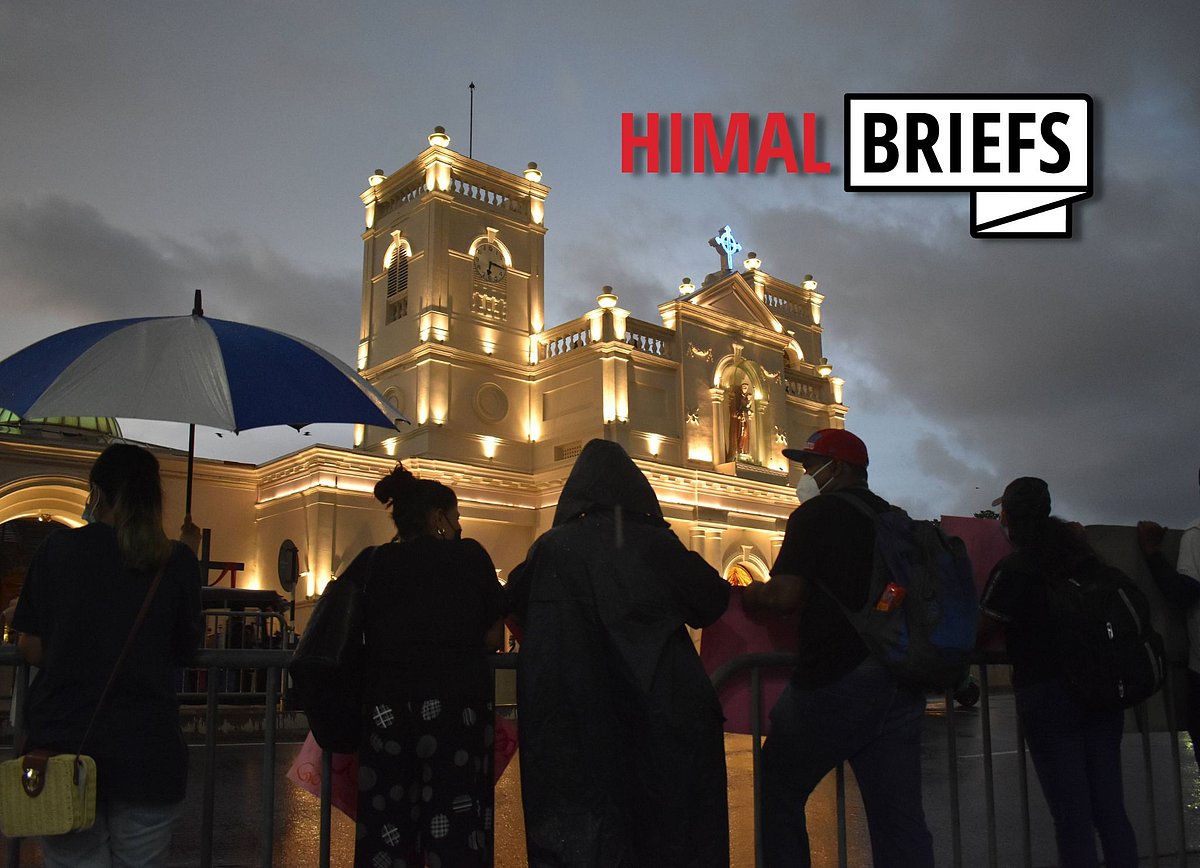
On 21 April 2019, Easter Sunday, the National Thowheeth Jamath, an Islamist militant group, carried out a series of attacks targeting churches and hotels in Sri Lanka. A total of 269 people were killed and more than 500 were injured. From the beginning, there were accusations of negligence from the highest echelons of the political and security establishment, and a number of petitions alleging fundamental-rights violations were filed against heads of the government and intelligence services.
The Sri Lankan Supreme Court considered 12 fundamental-rights petitions and concluded that the respondents – who included former President Maithripala Sirisena, former Inspector General of Police Pujith Jayasundara, former Defence Secretary Hemasiri Fernando and former Chief of National Intelligence Sisira Mendis – did not act on intelligence received about the imminent attack with the seriousness it deserved. The court also expressed its "shock and dismay at the deplorable want of oversight and inaction that we have seen in the conduct of affairs pertaining to Security, Law and Order and Intelligence." It is important to note that President Ranil Wickremesinghe – the prime minister at the time of the attack – was named as a defendant in all the cases but removed as a defendant in July 2022 as he holds the position of executive president and so has immunity from prosecution.
Sri Lanka's 1978 Constitution introduced the executive presidency in a bid to facilitate the state's agenda of expedited economic development. However, it is now broadly recognised that the concentration of executive powers in one individual and the immunities attached to the office are inimical to the constitutional balance of powers. As the Supreme Court verdict shows, the concentration of all defence-related institutions under President Sirisena hindered officials in charge of security and intelligence from carrying out their duties.
Sri Lanka's Catholic Church, led by Cardinal Malcolm Ranjith, as well as those who campaigned for justice for the victims of the attack, hailed the verdict as a "very happy beginning" and a milestone on their road to justice. The judgement may herald the beginning of a new era in constitutional jurisprudence regarding the parameters of executive responsibility in Sri Lanka. Given that the verdict came a few months before a crucial local government election and the appointment of a new IGP, it also has implications for the country's political trajectory. It will have devastating consequences on Sirisena's political career and will weaken his position in his crisis-ridden party – the Sri Lanka Freedom Party (SLFP). Unfortunately, it seems Sri Lanka's political class has learnt nothing from the devastation of the Easter Sunday attacks as it tries to use the Supreme Court verdict for political manoeuvring instead of making the necessary structural changes to prevent the recurrence of such tragedies.