
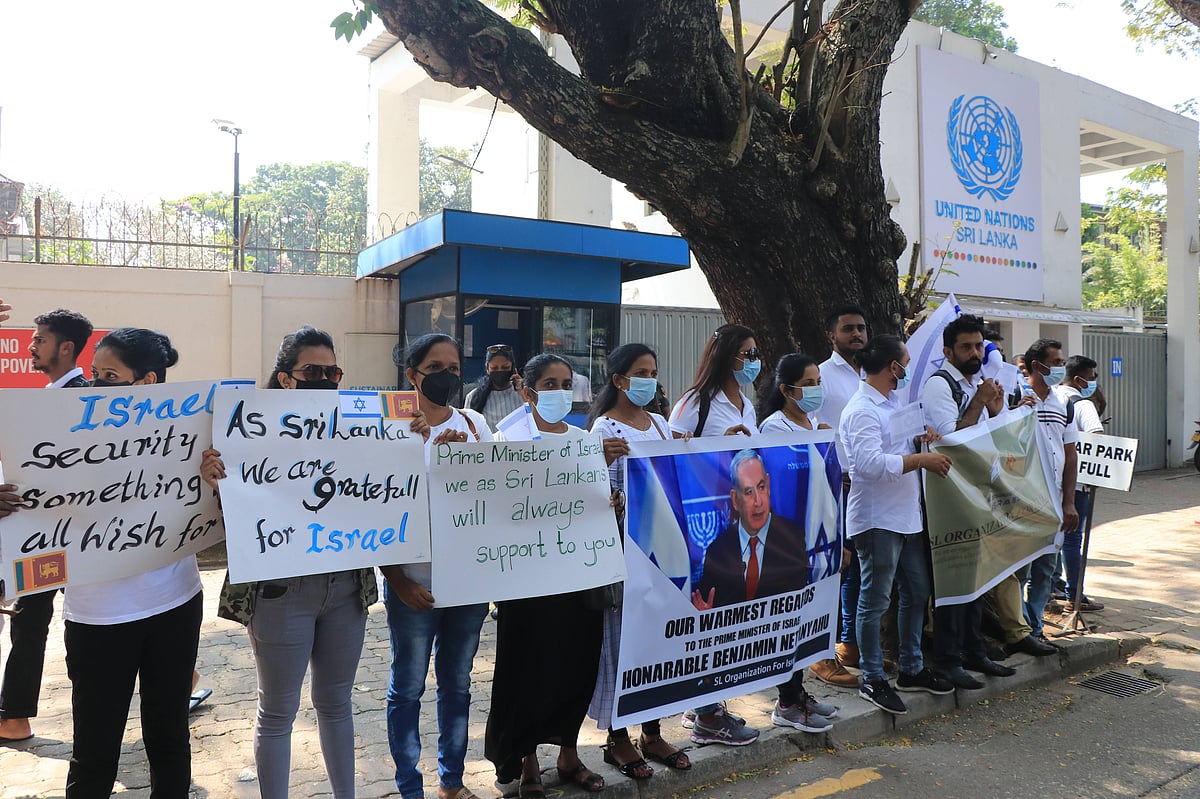
MOHAMED SUHAIL, a 21-year-old student, was searching for lodgings in the Colombo suburb of Dehiwala on 23 October 2024 when a mobile police unit arrested him near Israeli consular premises. His supposed offence was not carrying his national identity card. A magistrate ordered his release after the document was produced.
After Suhail went home to Mawanella, a small town some 100 kilometres from Colombo, police arrested him again. This time, he was remanded under the Prevention of Terrorism Act. His new “crime” – having anti-Israel posts on his social media – was a non-crime even under this draconian law. Yet Suhail was denied bail and remained in detention.
Suhail’s ordeal came to light after Colombo police arrested another Sri Lankan Muslim for the “crime” of being anti-Israel. This March, 22-year-old Mohamed Rushdi pasted a sticker saying “Fuck Israel” in a mall. The police obtained a 90-day detention order for the act of “pasting a sticker with extremist views” directly from the defence minister, Anura Kumara Dissanayake – also the president of Sri Lanka.
Rushdi’s arrest caused an uproar. Human rights activists, lawyers and opposition parliamentarians protested. The government was forced to back down in the face of public outrage and an impending European Union review of Sri Lanka’s compliance with GSP+ – a trade agreement granting preferential access to European markets, conditional on meeting set human rights standards, that has become an indispensable lifeline amid the country’s ongoing economic crisis. The police asked the courts to give Rushdi conditional bail, admitting they had found no evidence against him. In July, Suhail too received bail, with the police having failed to produce any evidence to substantiate the terrorism accusation against him. He had spent eight months and three weeks behind bars.