
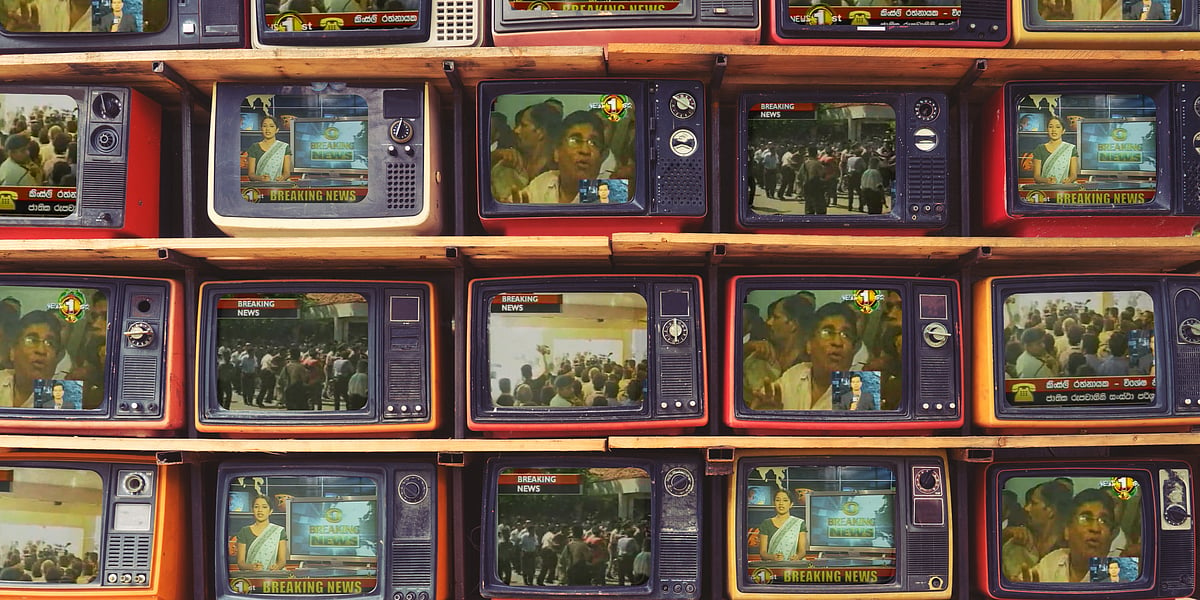
This story is published in collaboration with the Free Media Movement of Sri Lanka, part of a series for Black January, which commemorates crimes against Sri Lanka's journalists. It has been translated and edited from Sinhala, with updates on T M G Chandrasekara’s case.
“This morning, a group of thugs led by Mervyn Silva forcibly entered the [Sri Lanka Rupavani Corporation] news division and assaulted News Director T M G Chandrasekara.”
On 27 December 2007, this was the breaking news reported by every television channel in Sri Lanka, referring to the violent intrusion into the state-owned television broadcaster, Sri Lanka Rupavahini Corporation (SLRC), by a group led by Mervyn Silva, then the labour minister.
At the time, the United People’s Freedom Alliance coalition government, led by Mahinda Rajapaksa as president, had been in power for just over three years. Silva’s intrusion into the premises of Rupavahini, and the chaos that ensued, was broadcast live across all private television networks. The assault on Chandrasekara sparked nationwide outrage. Yet while this event was widely discussed during the early years of Rajapaksa’s first term, public discourse surrounding it had significantly diminished by the time his second term began in 2010.