
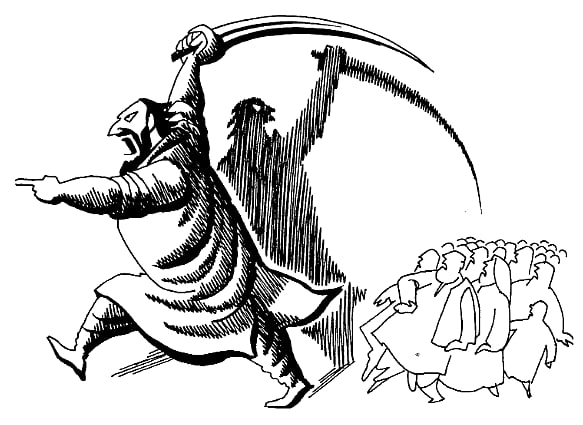
Killer words have a place in the lexicon of states. Their use can devastate societies.
Nations and states are talked into existence, and kept alive by words. Listening to such words suggests that while states and nations can speak different languages, the structure of the languages they speak is basically the same. And, as Noam Chomsky has suggested for the more mundane, day-to-day languages of people, state languages may also have a grammar that is pre-wired.
The basic "deep structures" of state languages include national identity, the interests of the state, development and security. From the United States of America to Niger (ranked last in the UNDP Human Development Index), these categories are part of every state's language. But unlike human language, every state's grammar has a space for killer-words. These are words that allow murder to be thought and committed.
There are state killer-words that are backed by the power of the state: a declaration of war which leads to the deaths of thousands, if not millions, or a judge passing a verdict of guilty and condemning a person to death. What marks such words is that only particular people can speak them, and that, too, only after a process of judgement. These state killer-words are part of the vocabulary of a system of official power. Without the legitimacy that the system offers, they are just words.