
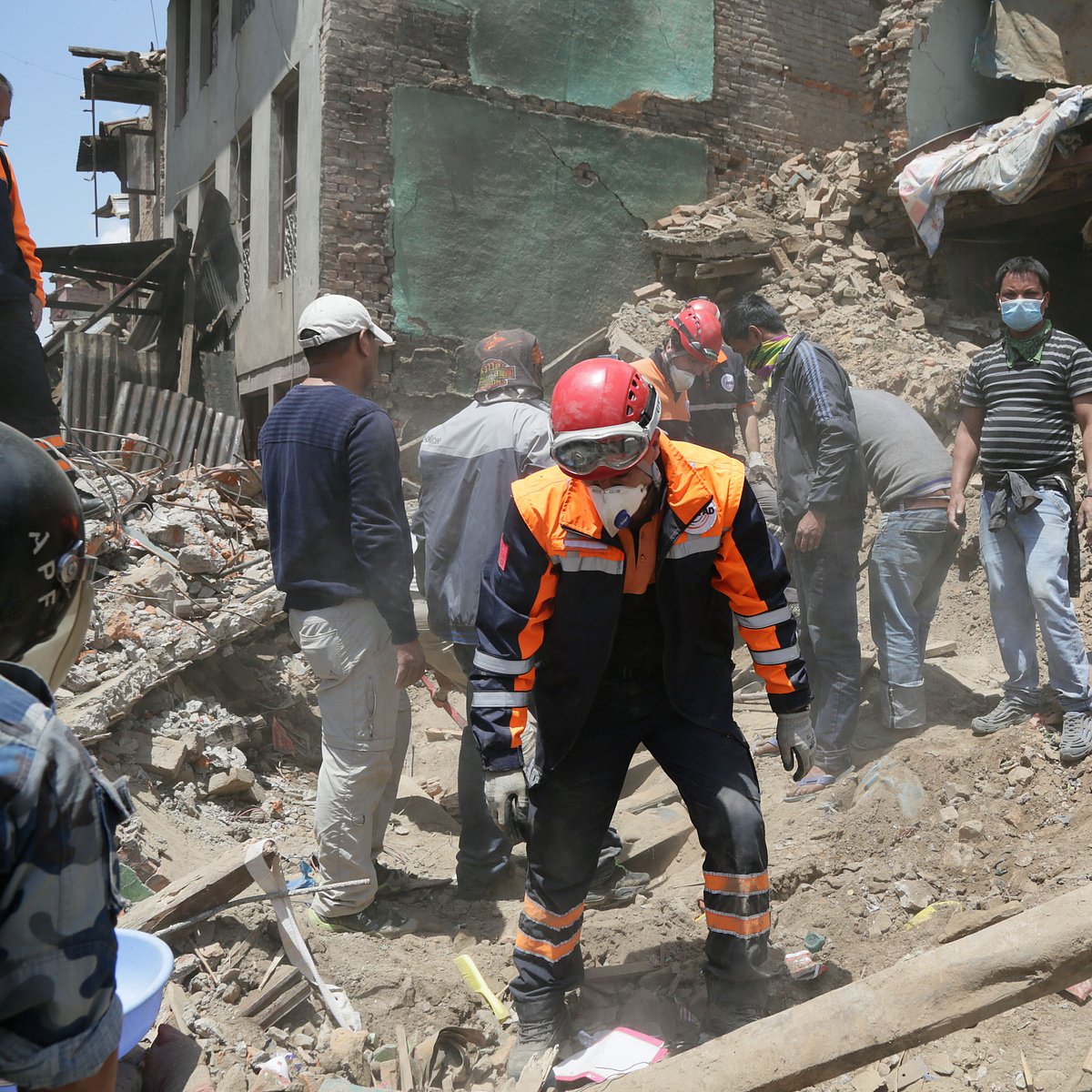
On 25 April 2015, Baburam Bhandari, an undersecretary at the Home Ministry, had just sat down to read a daily newspaper at his apartment in Kathmandu when the 7.8-magnitude earthquake rippled through Nepal. He, his wife and two children left their home in the Shankhamul neighbourhood and waited on the street, joining dozens of terrified survivors. Until a month before, Bhandari had been chief district officer of Mustang, the frontier district bordering Tibet, where an avalanche on the popular Annapurna circuit in 2014 had left dozens of trekkers dead. In Kathmandu, he had been deputed to the National Emergency Operation Centre (NEOC), a section under the Home Ministry, tasked with communicating and coordinating rescue operations after natural disasters.
As the head of the NEOC, Bhandari is required to reach the office at the earliest in the aftermath of a natural disaster. It was Saturday, the official weekend holiday in Nepal, and his driver had gone home. As he walked past frightened people, Bhandari found a parked car bearing a white government number plate. At least one of his problems was solved, he thought. But the car's driver was both scared and reluctant.
Bhandari eventually persuaded the driver and they drove through the streets, now crowded with people. A handful of security officers guarded Singha Durbar, the administrative headquarters that sprawls over a huge swathe of land in the centre of the Kathmandu Valley, housing almost all the government ministries and many state institutions. When Bhandari arrived at the NEOC half an hour after the quake struck at 11:56 am, he found the office at the northern edge of Singha Durbar almost deserted. Since it was Saturday, only four security personnel among the office's 13 staffers were on duty in the white one-storey, red-roofed prefabricated building constructed in 2010 with funding from the United Nations Development Program.
After the quake struck, Laxmi Prasad Dhakal, joint secretary and spokesman for the Home Ministry, looked down from the hillock of Dhapasi in Kathmandu's northern outskirts. The iconic nine-storey Dharahara tower was no longer visible. A cloud of dust had risen, obscuring the view of the city. Dhakal got dressed, grabbed the car keys and headed straight for his office. An aftershock hit as he drove along the Ring Road, which was already in disarray. Some people warned him not to go further, but he continued driving through roads littered with bricks and debris. Dhakal took a detour, negotiating the road by the Taxpayer's Service Office in Maharajgunj, where, he would later find out, four government officials had been buried to death. "The streets were so crowded and it seemed as if everyone in Kathmandu was out of their homes," he said.