
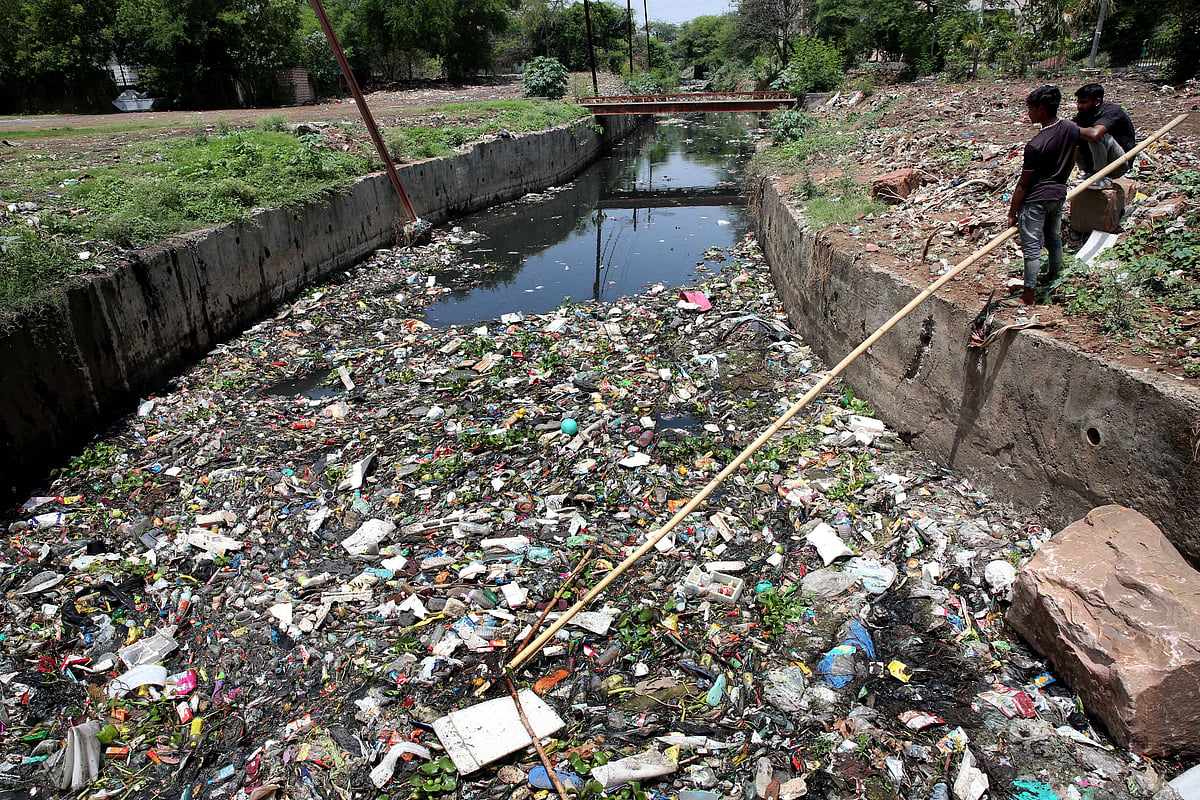
In late January 2006, the sewer ran over. Our well-heeled street in Chennai pulsated with excreted lava. A work crew arrived to lift the manholes and break the pavement. By mid-morning, they had put pipes into the sewer and had begun pumping out as much of the sludge as possible. The smell overpowered everyone. Then a few of the men and women put plastic bags over their hair, lifted up their lungis and saris, and descended into the sewer.
They stood in the black treacle of shit, piss and other assorted matter, using bamboo sticks as oars to move the sewage around, and then buckets to pass it out to be deposited on the street. A little later, they left the holes to wash their feet and hands with water from a white plastic container. One man gave me a big smile and said, "dirty," in. English.
I do not speak Telugu, the language of these contracted labourers from Andhra Pradesh. The municipality does not hire them directly, because the work they must do is illegal according to 1993 national legislation. Nonetheless, there are now about 10,000 such workers in Chennai, most of whom live in one of the 150 slums within the city's precincts. The contract labourer said dirty, and even as the word was nowhere near sufficient to describe what he had experienced, it sufficed. It was dirty. The whole thing was dirty: the sewage, the job, and the coexistence between humans as technology-saving devices and technology to save labour. Why does the municipality use human labour, when it could turn to machines to clear the drains? It took Eleanor Roosevelt's visit to India in 1952 to introduce the long broom for street-sweepers.
Why does Indian civil society tolerate such a reduction of the human being?