
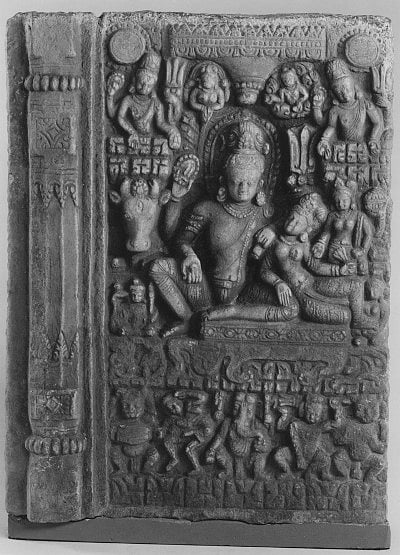
The Kathmandu Valley, it was said back in the 1950s when Nepal opened its portals to the modern era, had more statues of gods and goddesses than people. This is no longer so, in particular because over the decades the deities have been stolen by the thousands from public and private places, to such an extent that there are very few left to steal. The thieves have moved on, mostly. Idol theft in Kathmandu is of a dimension different from the Pharoanic loot along the Nile or the desecration of Gandharan sites in Punjab and North West Frontier Province. The Hindu-Buddhist-Varjrayan statuary of 'Nepal Valley' represent a living, contemporary faith. The statues were dragged from pedestals and yanked from alcoves by a brazen contraband industry that included the common thief, the Nepali middleman, the foreign scholar, the diplomat and the art collector – leading all the way to museum curators and art historians who produce heavy volumes on Himalayan art. Unkempt deities – who, till the moment of theft, were receiving offerings of flowers, rice achheta, vermillion and water – are now lonely, polished objects spotlighted in museum showcases and on private mantles.
Ted Riccardi, a Himalayan scholar, saw it all happen during his work in the Kathmandu Valley from the 1960s through the 1990s. He knew some of the crooks, saw how they worked, and had the perspective and empathy to know that the common Kathmandu criminal was no more to blame than the soft-spoken curators and historians in New York, Hong Kong or San Francisco. This article represents a cry of anger and frustration at the desecration of Kathmandu Valley, and the denigration of the simple faith of the people by forces beyond their comprehension – a cry that speaks of the hundreds of thousands of devotees who suddenly found that their gods had gone missing. The thieves named here also represent entire categories of those who evaluate, assign value, auction, buy and exhibit the valuable, stolen iconography of Kathmandu. You know who you are.
There is one more thing to add to Riccardi's presentation. It is an incontrovertible fact that every ancient stone and bronze statue from the Kathmandu Valley – to the very last one – that now finds itself on an overseas pedestal, is a stolen item (see Himal October 1999, "Gods in exile"). Not one of them was gifted or handed over with the agreement of the faithful. Every museum and collector who owns a Kathmandu Valley statue of antiquity must regard it as being 'on loan', to be returned when Nepali society finally wakes up from its headlong entry into the modern era – and, amidst political stability and modern-day self-awareness, asks for the statues' return. At that point they should be handed back to the faithful, and placed in their original positions.
– Kanak Mani Dixit