
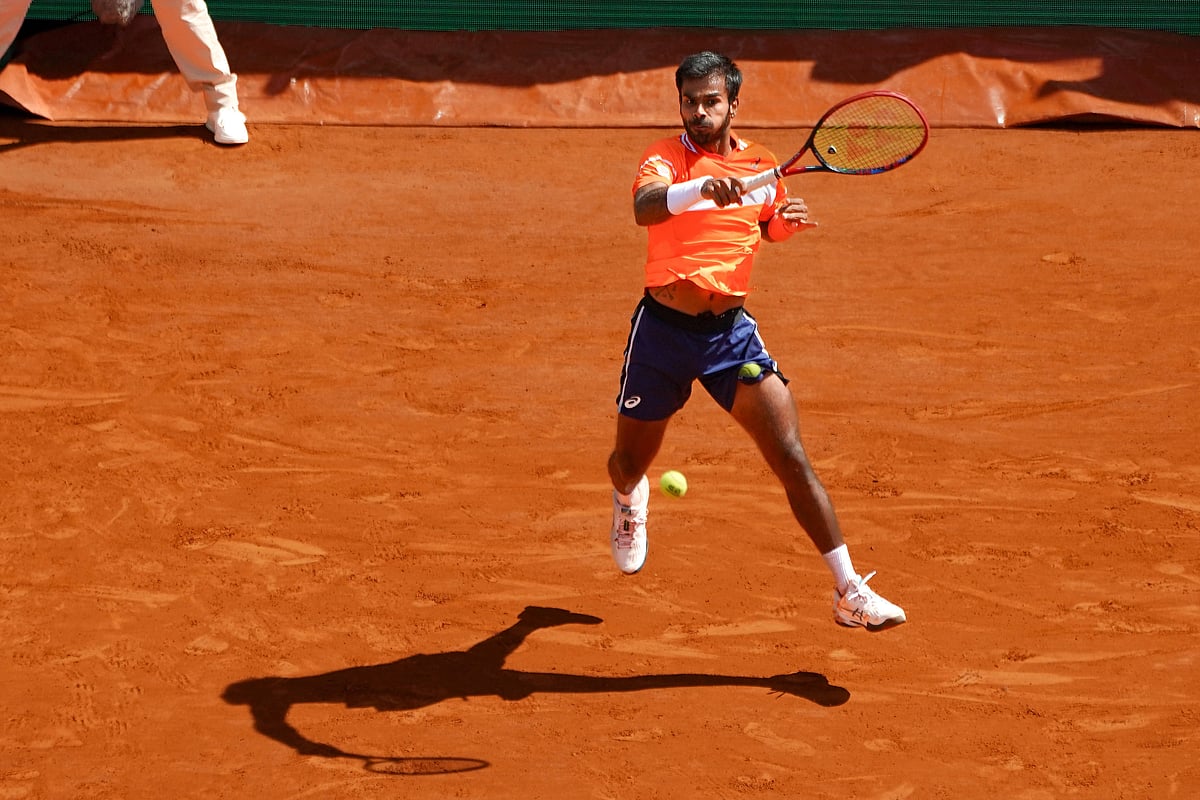
SOMEHOW, IMPROBABLY, Sumit Nagal, ranked 137th on the Association of Tennis Professionals tour, had fought Alexander Bublik, ranked 27th, to a third-set tiebreak. Two and a half gruelling hours had passed on a bright blue acrylic-layered court at the 2024 Australian Open. Nagal had three match points, and he just had to make one of them. He wore a neon orange kit and a white cap. Long white sweatbands ran up his forearms; sweat sheened his forehead and calves. On the other side of the court was Bublik, seeded 31st for the tournament, pale and lanky, taking in harsh breaths. A twisted racquet lay next to Bublik’s bench, from when he had smashed it in frustration. Late in the second set, he had been seen laughing to himself in disbelief.
The crowd was captivated. Nagal was never supposed to get this close.
But suddenly, Nagal began to choke. He squandered his first two match points on mistimed forehands that landed far wide. If Nagal lost the tiebreaker, it wouldn’t matter how well he’d played so far. Bublik would take the third set, and with it a second chance: to claw back the fourth set, and then the fifth, and then the match, which had been, for a brief, bright moment, all Nagal’s.
This was the beauty and cruelty of tennis, a sport played without a clock: it was never too late to win. And it was never too late to lose. Nagal looked tired. When he lost the second match point, he paused, briefly, to drop his hands to his knees and bend low. Was he despairing? Was he trying to catch his breath?