
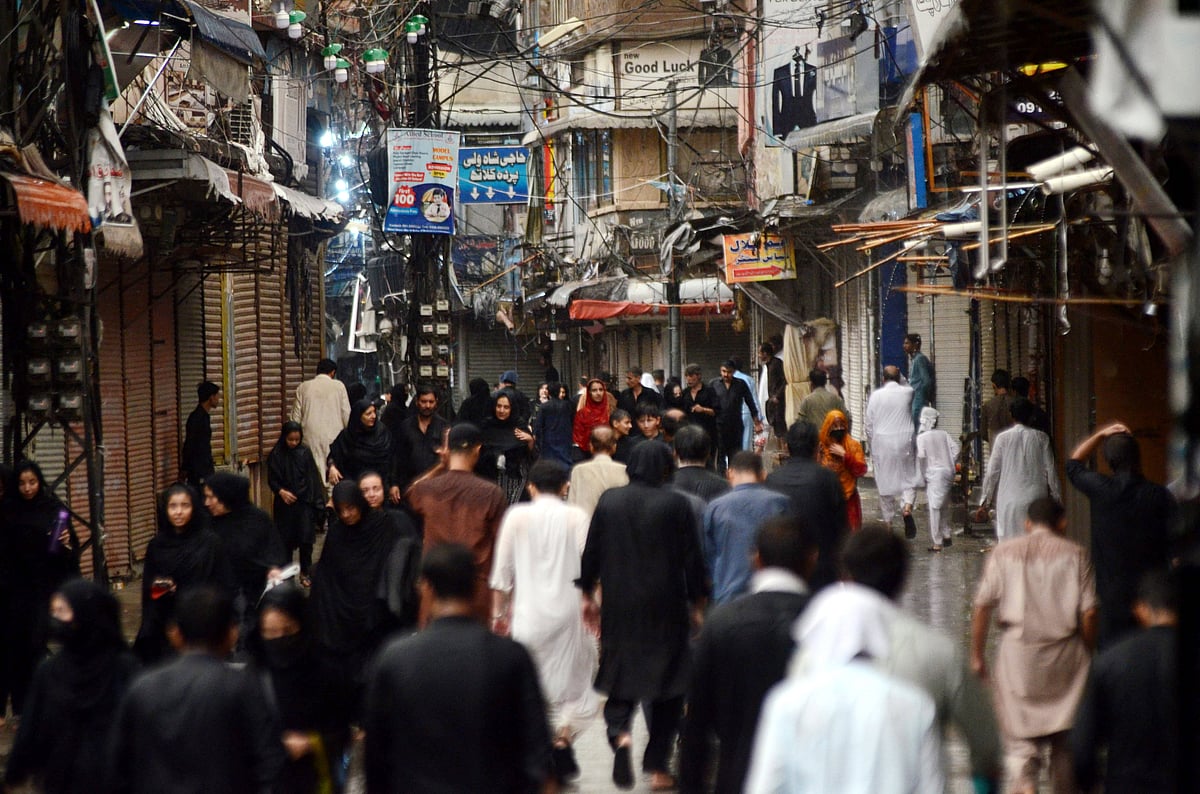
“MEN AND WOMEN used to dress fashionably, enjoy music, watch television, visit shrines and play sports without being judged as becoming irreligious,” a young resident of Bajaur district in Khyber Pakhtunkhwah recalled. But things are changing, and he pointed to the agents of the change. “Now, Tablighi Jamaat members, with their puritanical religious views, think that most of these activities are sinful and against Islam, thus turning the society towards intolerance and narrow-mindedness.”
The Bajaur resident said the Tablighi Jamaat has gained great popularity in his area, with thousands of active members. “They visit people individually in mosques, shops, schools and workplaces, and invite them to become members of the Tablighi Jamaat. It has changed the cultural landscape of Bajaur drastically.” And though the Jamaat “does not directly preach terrorism and violence, it nonetheless provides the raw human resource that can be easily turned into jihadists.”
The Tablighi Jamaat, an international Islamic movement with millions of adherents, is well known in many countries for its orthodox preaching, and has had a strong presence in Pakistan since shortly after the country’s creation. In recent times, the Jamaat has been making major strides in Khyber Pakhtunkhwah, the province stretching along Pakistan’s disputed north-western border with Afghanistan. Dominated by Pashtuns, the frontier region has long prided itself on its distinct traditions, such as the Pashtunwali tribal code. But, many locals say, the Jamaat’s rising popularity and influence is changing Khyber Pakhtunkhwah’s cultural, religious and – to some degree at least – socio-political landscape.
To a significant majority of the province’s population, the Tablighi Jamaat is innocuous, uncontroversial, engaged in promoting piety. But many others see it as promoting dogmatic thinking, with simplistic and often problematic perspectives on life and religion. Some also see links between the activities of the Jamaat and religious extremism.