
There is an old Punjabi proverb 'aata gun'ni aen tay hildi kyun aen?' which loosely translates as: why must you move when you knead the dough?
There is an old Punjabi proverb 'aata gun'ni aen tay hildi kyun aen?' which loosely translates as: why must you move when you knead the dough?
It conjures up a very specific image: a woman sitting on the kitchen floor, with a huge silver parat (circular tray) in front of her – inside the tray, a precise mixture of flour and water. Fists rolled into balls, she kneads the dough mechanically, throwing her body into the movement. Even though the woman is apparently fulfilling her 'duty' in a private space, she is also being monitored and surveilled. And then, someone – oblivious to or apathetic to her efforts – very obviously waiting for her to manifest her destiny in the form of a well-cooked roti, turns around and irritably asks her: aata gun'ni aen tay hildi kyun aen?
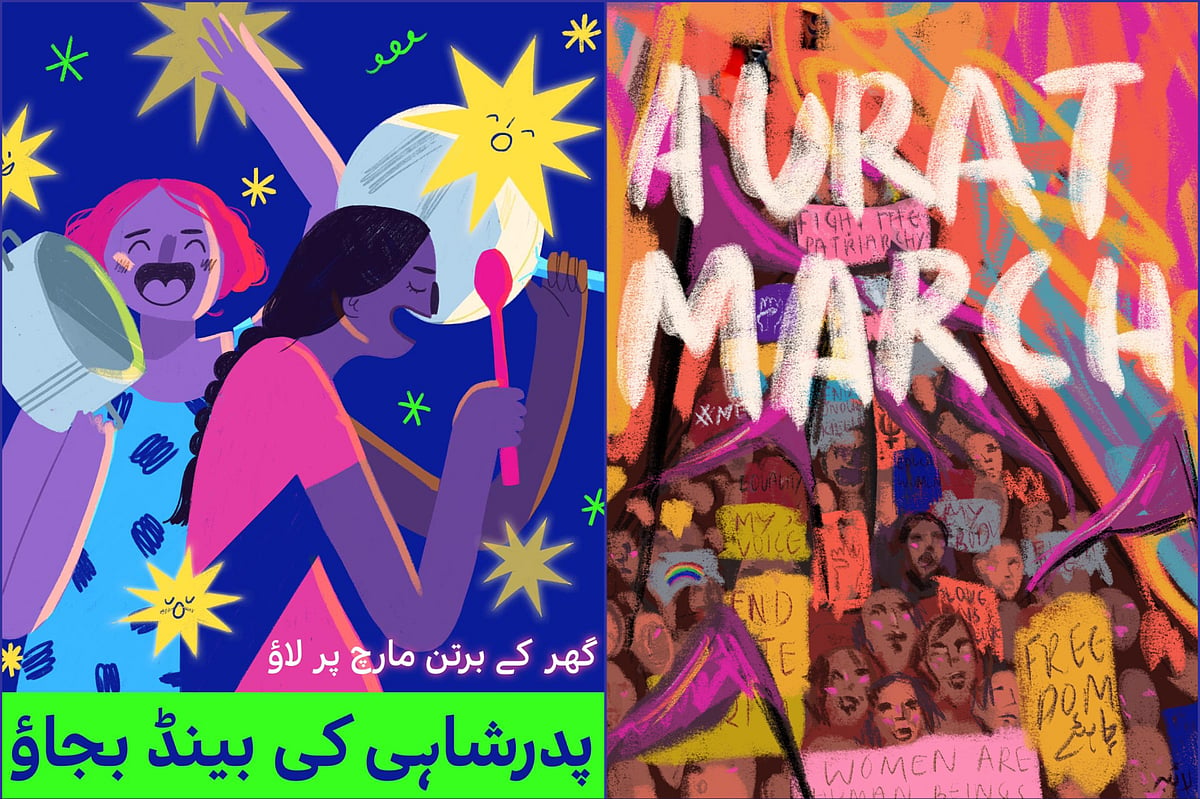
The bold placards at the Aurat March have redefined what it means for women to pursue emancipation and freedom. The language no longer sustains the divide between public and private domains.