
As she peered at the old photograph, the elderly Armenian woman could not hold back her emotions. She clasped her hands together, muttering and shaking her head in disbelief. The photograph depicted children standing in a row on a stage, perhaps for a school performance. Tears rolled down her cheeks, as she stroked the glass that protected the photograph, her fingers seeking out a little girl in a bonnet.
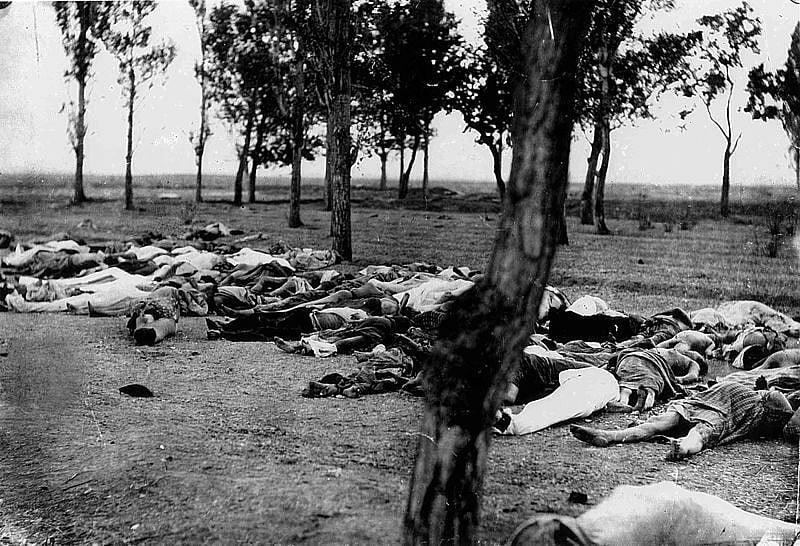
The photograph was taken in 1932 and was part of an exhibition collection called 'Armenia 1915 Centenary of the Genocide', displayed at the Paris City Hall in May 2015. Anna, the elderly woman, like other Armenians, had come to see the exhibition commemorating the anniversary of the Armenian genocide, a key event in the history of the 20th century. She had fled Armenia in West Asia as a child along with thousands of people in the wake of the violence unleashed by the Turks of the Ottoman Empire and had grown up in refugee camps in France. Now in her 80s, Anna recognised the little girl in the bonnet. "That's me!" Anna exclaimed and dragged her daughter to show her the photograph. Both were pleased that an Indian showed interest in the exhibits and posed for a photograph with ready smiles.
My interest stemmed from the fact that a few thousand Armenians had escaped to India during the period; at least 2000 of them ended up in Kolkata. Since colonial times, the city was a thriving cosmopolitan business hub attracting communities from all over the world. During the 19th century, Kolkata had been broadly divided into the British 'White Town' and the Bengali 'Black Town'. The Jews, Chinese, Greeks, Parsis, Armenians and the Portuguese lived in pockets between these segregated spaces, peacefully co-existing with the local populace. The sacred flame of the Parsis' Zoroastrian fire temple continues to burn since 1912 in central Kolkata, sharing street space with the Aga Khan Jamatkhana, where people from the Ismaili community gather to pray. Unlike in the rest of Europe, the Jewish community were not persecuted in India, and so their numbers grew in Kolkata during World War II. As far back as the 18th century, the Baghdadi Jews came as traders and settled in the port cities, including Kolkata, and advanced their social and economic ambitions. Each of these immigrant communities thrived and started their own schools, places of worship and even newspapers.
While growing up in Kolkata during the 1960s and 1970s, Bengalis interacted sporadically with immigrant communities like the Armenians, Jews, Parsis and Chinese. But these interactions were limited to buying confectionary from the Jewish bakery Nahoum and Sons, tucking into dinners at the fabled Fatty Mama's Chinese dhaba or buying personalised handmade high heels after getting our feet measured at Li's in Bentinck Street in central Kolkata. I did not have any Armenian friends. As children, the closest we got to the Armenian community was when we peeped through the high iron gates of the Armenian school tucked away in Free School Street, off the fashionable Park Street. We could only catch a glimpse of the sprawling playground within the compound, and we used to plot about how to sneak in. We would eavesdrop on casual conversations our elders would have on how the Armenians were a wealthy business community, comprising mostly of merchants and builders, who "owned more than half of Park Street". We learnt that the posh parts of Park Street that housed the restaurants and night clubs, forbidden to us even as teenagers, and majestic buildings like Park Mansions and Stephen Court were built by Armenians. There were stories galore of their wealth, real or imaginary, deposited in Hong Kong banks and how they took care of their own people. We would fantasise about becoming friends with a generous Armenian who would treat us to sumptuous cakes and chocolates from the famed Flury's cafe.