
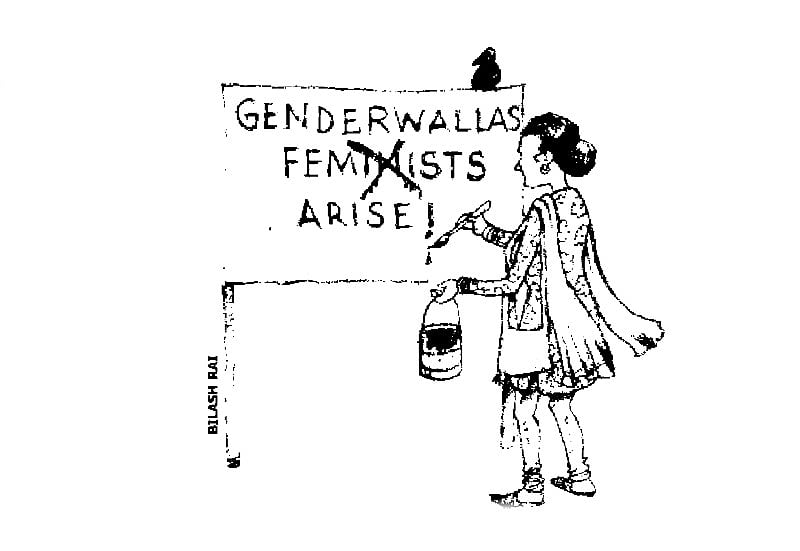
Vibrant, forceful, dynamic, strident. Many more terms can be used to depict the Indian women's movement, but these will suffice to describe some of the great transformative events of the second half of the 20th century – a period of exhilarating social upheaval. Although 'women's issues' are being picked up and debated everywhere, we find the voices of the movement somewhat muted today. There has definitely been a dumbing down of the cause. To what do we owe this? Has the mainstreaming of gender blunted the edge of the women's liberation movement? Can the movement be reclaimed?
In the 1970s, organisations of the New Left and mass-based organisations mobilised around issues of social injustice. Tribal landless labourers led movements against the exploitative practices of non-tribal local landowners, land alienation and extortion by moneylenders. Women were at the forefront of these struggles, and began to take direct action on issues that affected them specifically as women – liquor, for instance, and the physical violence and indebtedness associated with alcoholism.
Similarly, the Anti-Price Rise Movement in Maharashtra following the drought of the early 1970s brought women together under the banner of the United Women's Anti-Price Rise Front. This militant campaign saw thousands of housewives taking to the streets in protest, marching with thalis and rolling pins, challenging government dormancy and demanding action against black-marketeers.
All over the country, women participated actively in movements for social transformation. The Garhwal hills were home to the Chipko movement, initiated by rural women to prevent destruction of forests by contractors and government officials acting in collusion. Moving beyond the immediate objective of saving trees, Chipko came to symbolise women's relationships with the environment and their crucial role in maintaining ecological balance.