
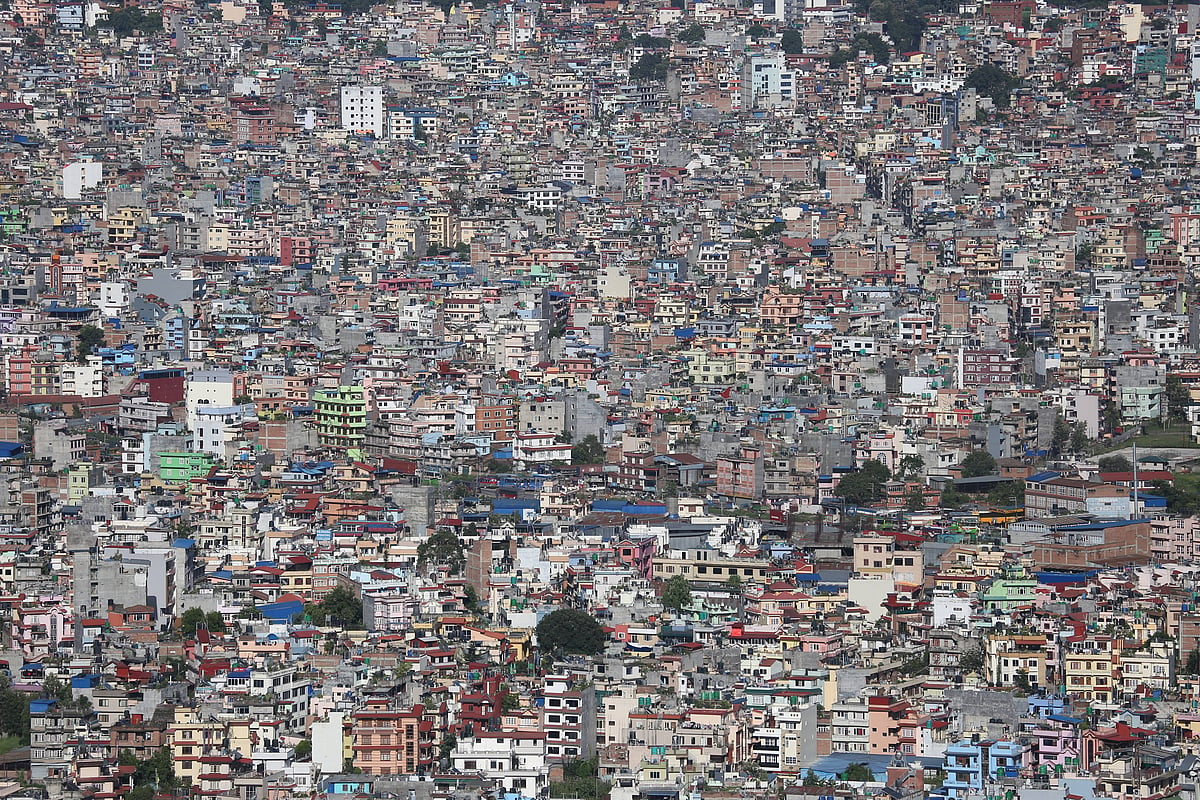
City administrators all over the world use land taxation to generate revenue for day-to-day development activity and public works. Land taxation also helps in town planning by guiding certain land uses, controlling speculation, and promoting economic growth through efficient use of property.
The value of the land is an important portion of the total national wealth, especially in a country like Nepal with its poor capital base. The rationale for urban land taxation is that land as a resource should be subject to public control and managed properly in the interest of the nation. Public authorities must be able to recapture part of the landowner´s ´unearned´ income derived from the development of neighbourhoods through government investment programmes.
Different evaluation methods are used to levy property tax in different countries. The rates vary. For example, in Denmark it is 0.4 per cent of the property´s market value while in the United Kingdom, tax is levied on the basis of rental value of the property. In Nepal, some form of urban property tax does exist and is known as the "Houses and Compound Tax" (ghar-jagga kar). This tax is applied on a house and the parcel of land surrounding it. Property lying idle or vacant are not subject to this tax.
The revenue generated through the ghar-jagga kar is extremely low, primarily because the administration of the tax is very weak. This weakness can be attributed, firstly, to the absence of up-to-date inventory of property in map form and the inadequacy of existing cadastral maps. In addition, the existing assessment system does not consider the real value of buildings in terms of their use and location. It merely considers construction costs of the house with allowances for depreciation.