
Images of popular resistance against British rule across the Subcontinent readily invoke the Indian Mutiny of 1857, Subhas Chandra Bose and his Indian National Army, Gandhi's civil disobedience movement, as well as the rise of the Indian National Congress. Of course, there were other smaller, though significant, uprisings and rebellions, including the Vellore Mutiny in 1806, the Paik Rebellion in Odisha in 1817, and the Tana Bhagat resistance movement in 1914. Such acts of revolt have been well documented, often incorporated into history syllabi, and part of our common historical imagination on colonial resistance. However, there are tales of resistance and rebellion against British officers and offices that have long been forgotten, or have never been told, especially when they occurred in lesser-known faraway places. This is about one such story of resistance as it unfolded in the rugged, forest-clad uplands of what is today the state of Nagaland in India's Northeast – by a people now known as the Chakhesang Naga tribe.
The year was 1851, the month February. In the hilltop village of Kikrüma (invariably spelled in colonial documents as Kekree-Mah, Chekrimi, and Kekrema), tucked away deep within the rolling Naga Hills, Sukrunyi, the main annual festival had just been celebrated, lavish with lumps of meat and gallons of rice-beer. Preparations were now underway to start the sowing of new seeds. It would not be long before the village thüvo-o, or priest, would settle on an auspicious day to placate the spirits by performing an age-old ritual only he was entitled to do. After that, he would ceremonially sow the first seeds, which would announce the beginning of the year's agricultural cycle. Like every year, much work needed to be done on the many paddy fields, neatly and painstakingly excavated from the rocky, slanting soil, and over which the village, built on a mountain crest, stood guard vigilantly.
However, one month on, few of the seeds had been sown. Instead most of the village's thatched and bamboo houses were now smouldering debris, as were the granaries which stored the remains of last year's harvest. Most of the livestock had died or had been scattered deep into the jungle, while Kikrüma's long thriving population had dwindled significantly.
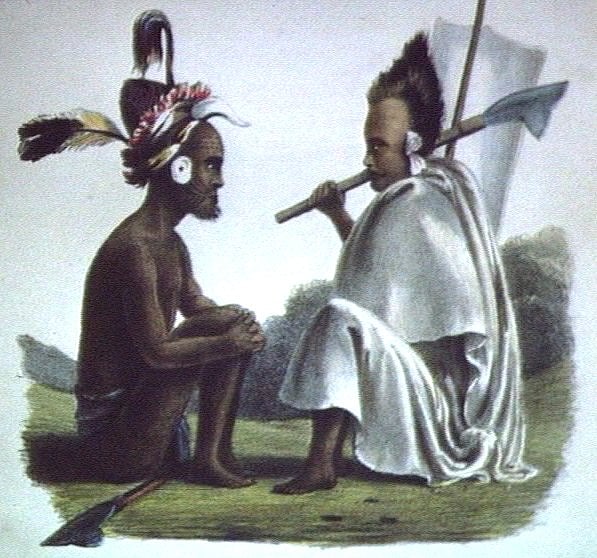
The 1851 battle of Kikrüma, fought between spear-wielding Naga warriors and rifle-toting British-led troops remains a story little known outside Kikrüma. The villagers of Kikrüma have long preserved, in their tradition of story-telling, the details of what happened, which they narrate with pride. These match the few accounts of the battle penned down by British officers such as Major John Butler, who filed the Kikrüma onslaught in Travels and Adventures in the Province of Assam, during a Residence of Fourteen Years (1855) as "one of the most bloody battles ever fought in Assam". While clashes between Naga villages and colonial forces were many, what makes the battle of Kikrüma different, and especially worth retelling, is that this battle was not the outcome of colonial forces seeking to attack and subdue the village, as they had reduced to rubble and burned many Naga villages, but because Kikrüma warriors had openly challenged British troops to a fight. This is the story of a single Naga village deciding to challenge the British Empire.