
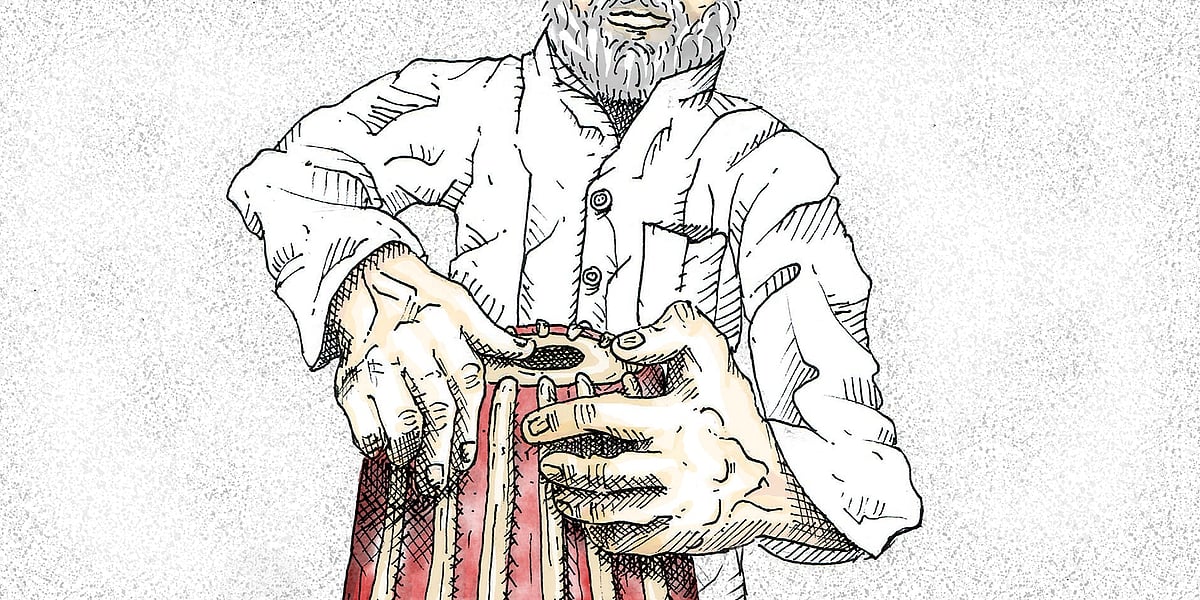
The story of the world, if you think about it, is really a history of erasures. It is characterised by the effacement of women's triumphs or the furtive rubbing away of how oppressed groups live and love. And then there is caste, a system that derives its strength from its power to dictate who and what to erase from collective memories. Such violence, internalised for generations, is at the heart of Karnatic vocalist, activist and writer T M Krishna's newest book Sebastian & Sons: A Brief History of Mrdangam Makers.
On the surface, the book is an investigation into the lives and work of the makers of the mrdangam – Karnatic music's primary accompanying instrument (Krishna uses the phonetic spelling for mrdangam throughout). But really, it is a treatise on the deep-rooted caste systems entrenched in Karnatic music, and the systematic erasure of those who do not fit into desired gender and/or sex, class and caste backgrounds.
While there have been performers, composers and musicians from other communities and religions, the rasikas – or connoisseurs – of Karnatic music remain predominantly Brahmin; the community also controls cultural power centres like Thanjavur and Chennai in Tamil Nadu. A notable exception was M S Subbulakshmi of the devadasi tradition. Not long after she shot to fame, her social origins were sanitised by her upper-caste manager-husband who successfully rebranded her as a chaste Brahminised wife, thus erasing her rich and nuanced cultural lineage.
Matters of caste are routinely swept under the rug by stakeholders in the Karnatic world. T M Krishna does not mince words when elaborating on the unequal relationships between mrdangam makers and upper-caste players. It was unsurprising then that Krishna's book has courted controversy from day one. Sebastian & Sons was to be released at the prestigious Kalakshetra on 2 February 2020; the event was also going to celebrate mrdangam makers. A few days prior, The Hindu published an excerpt from the book on how Brahmin players sought physical and mental separation from the fact that cow-skin was used to make their instruments, given their belief of the 'holiness' of the cow. Soon after, Revathi Ramachandran, the director of Kalakshetra Foundation, a Chennai-based cultural academy with parliamentary recognition, withdrew permission for the launch, stating in a letter that they were unaware of the controversies surrounding the book. Predictably, most of the controversies about the book hinge on the discussions on caste.