
In the beating, melting heat of the summer afternoons, there would be silence. The cattle were a sea of heaving hides, and the street dogs were passed out in the shade of trees and boundary walls, their tongues lolling as they dozed. Even the breeze came to a halt, afraid to rustle a leaf and awaken the creatures that nestled quietly within. And we, we would sleep with the rest of our families in the deepest room of the house on the cool floor where the heat couldn't catch us. We would sleep unwillingly at first, as all children do, but relieved with the knowledge that there was no one outside to play with. We would sleep because we knew the streets of the village were dead in the peak afternoon hours. We would sleep because we knew he would be there when we awakened.
He would come dragging the sunset with him, his little cart wobbling over the cobbled streets as the ringing of his bell drifted gently on the near-silent breeze. He would come and chase away the heat. The cattle would shudder, the dogs would stretch, and the little birds would chitter as they flitted out from their canopies. And as he neared our street with his sweet bell tingling, we would emerge. We could crawl out of the cool rooms and coerced siestas, out of doors, windows, and courtyards. We could crawl down the steps and off the porches, emerging from every crack and corner like little spiders in someone's nightmares. The street would go from empty to swarming in seconds as we all rushed out, half asleep, crowding around him as he drew to a halt.
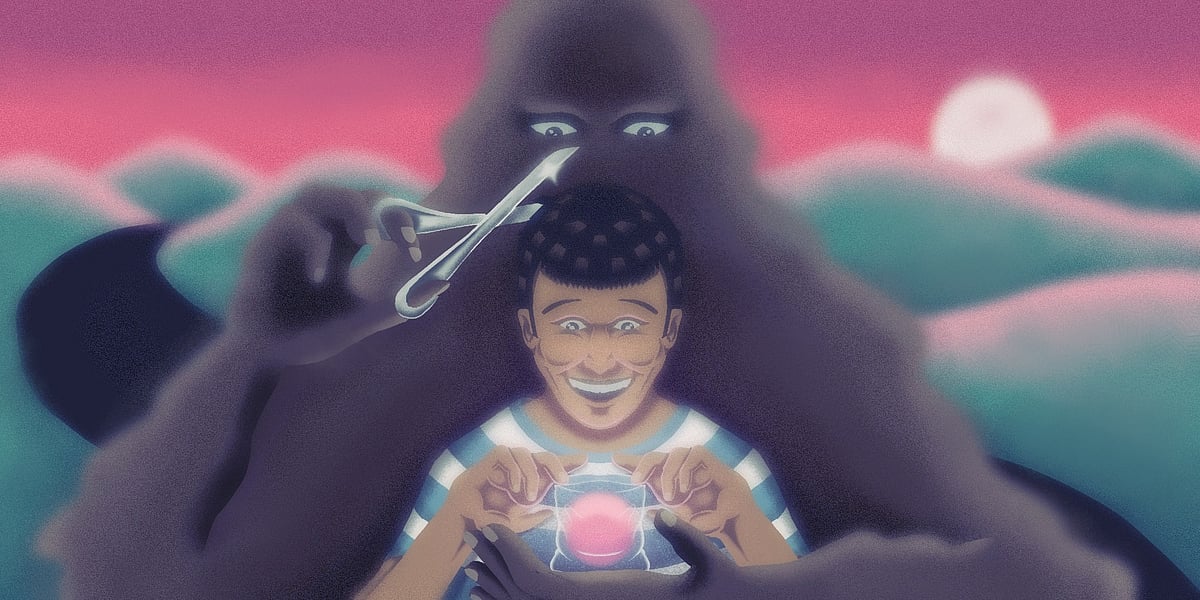
I remember the last summer I saw him, it was as it had always been. With my eyes half open and sleep clinging to their inner corners, I wobbled out of bed like a prepubescent drunkard when I heard his bell. My grandmother lived in a large haveli back then – a mansion split into parts, with sections walled off for different families. That was where I had always spent my summers. I stumbled out of our door to see Sonam and Sumit emerging from their side of the building. We pushed past each other as we scrambled down the four steps to street level, the competition pulling us suddenly into a state of wakefulness. We would often line up with coins in our hands, one- and two-rupee coins that were worthless outside the village. But this year, he had promised us a deal. "A deal just for you," he had said as he pulled out his scissors and snipped a little piece of hair off each of our heads. "A snippet of hair for a pack of cotton candy." Budiya khata was what we called it back then, 'old crone's hair' for those who came from the city. "Hair for hair. An equal exchange," he had justified the trade. With sugar-filled bliss on the line, we had obliged.
That day we stood at first in a cluster, and then in a neat line upon his warning glare. We stood with empty hands, hearts beating at the prospect of what would soon be in them. There were about twelve of us in all the houses clustered on that little section of street, and we knew each other well from all the summers we had spent together. We chatted as we waited, about things that were irrelevant to all but us: the colour of our new shoes, the next meal at home of disgusting vegetables and pulses. We chatted and waited, keeping an eye on him as he prepared.