
(This article is a part of the web-exclusive series from our latest issue 'At the cost of health'. More from the print quarterly here.)
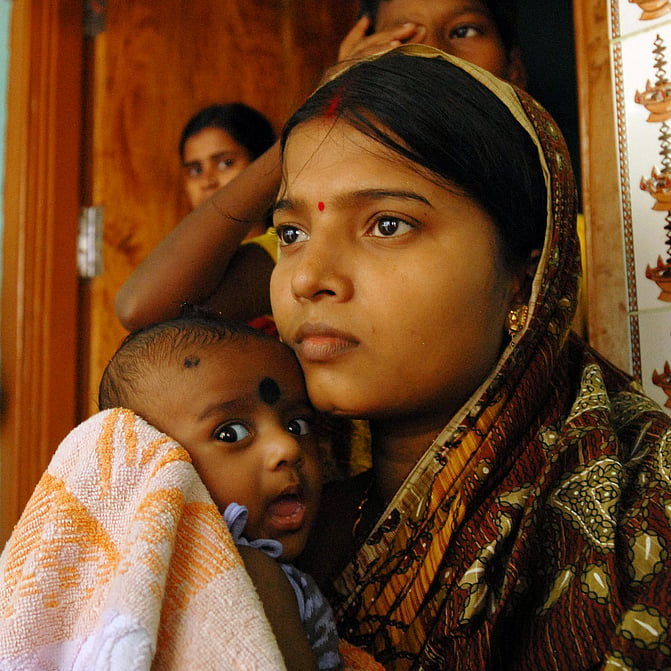
In August 2014, 24-year-old Masuhun Khatun from Fulvari village of Bihar's Kishanganj District was expecting her fifth baby. She was five months pregnant when she tripped and fell in the front yard of her house. Late that night, Khatun woke up writhing in pain and bleeding profusely. Her husband tried calling a government ambulance but to no avail. He then hired a private vehicle to get Khatun to the nearest government hospital. They found no doctors there and she was taken to a private practitioner, who said she needed to have an abortion.
Two weeks after the abortion at a private clinic, Khatun started bleeding again. This time she was taken to a state-run hospital where they found foetal remains in her womb. The hospital lacked adequate facilities, and so, Khatun was forced to undergo a remedial procedure at home. The operation was conducted by a state-appointed auxiliary nurse midwife (ANM), even though government rules do not allow this. For three weeks, Khatun shuttled between private practitioners and state-run facilities. Her condition worsened over several days until she died.
Stories of women like Khatun, who die in labour, are recorded only in the statistics. According to figures released by the Government of India, approximately 56,000 women die every year due to pregnancy-related complications. Even though there has been progress – maternal mortality rate has fallen from 437 deaths per 100,000 live births in 1990-1991 to 174 in 2015 – India still accounts for the highest number of maternal deaths globally. Most of these deaths would be prevented if the women received the medical care they are entitled to. Yet continuing deaths during pregnancy haven't pushed the authorities to take action or resulted in better policy planning to solve systemic issues. UNICEF's 2008 report 'India's Silent Tragedy' states how maternal deaths are invisible: "They don't leave any trace behind, and their deaths are not accounted for."