
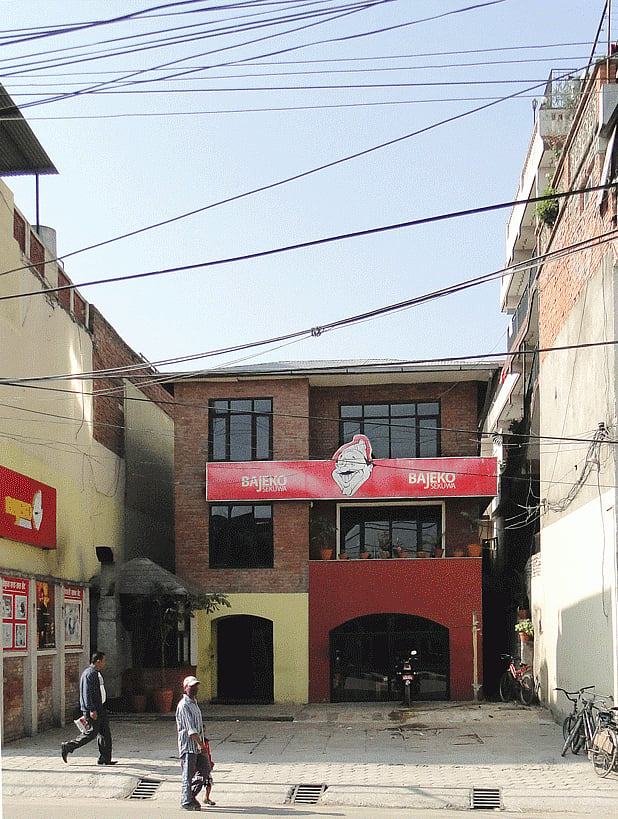
(This is an essay from our print quarterly 'Farms, Feasts, Famines'. See more from the issue here.)
In late 1997, Nepali entrepreneurs realised their dream of opening Nepal's first international fast food chain. The Shangri-La Group, which also owns the high-end Shangri-La Hotel, bought a license to open a Nepali outlet of British fast food chain Wimpy, which would become famous in Kathmandu for its chicken burgers. Its arrival offered a chance for the young consumers of Kathmandu to sample Western fast food for the first time in their home town. Before then, the Nanglo Bakery Café and Nirula's, the Indian ice cream bar, were the only places with some degree of resemblance to an international fast food chain. Wimpy's London headquarters provided technical support, while the equipment was delivered from the United States.
For the first three months, Wimpy's monthly sales came to more than NPR one lakh (USD 1140). "The customers were mostly teenagers and people in their 20s," Samir Thapa, a hotelier who helped set it up, told me. "They were ready to pay 120 rupees for wrapped chicken burgers. This was something unheard of in Nepal and it was a huge success." But soon, logistical problems began to surface. Almost all the raw materials and ingredients had to be imported from India. As sales grew, the licensees scrambled to supply the raw products. "We had to ship a consignment of frozen french fries and chicken for three months at a time, and there was no place to store it." Thapa had just returned to Nepal after completing a Masters degree in hotel management from a university in Texas, USA. Prasuma, a Kathmandu-based company that sold raw meat products, agreed to lease its cold storage facilities. But the costs were so high that after running the franchise for a year, the Shangri-La Group sold it on. Reflecting on his experience, Thapa believes that the Nepali market back then was simply not prepared for an international chain of the kind that thrives on a massive customer base and rapid expansion.
The Shangri-La Group had purchased the license for five years, and Prasuma ran Wimpy's for the remaining duration. The license was never renewed. Soon after, a new restaurant awkwardly named Wimpy's King Burger opened on Wimpy's old premises, with the new owners trying to cash in on the British chain's brand. Although some raw products were supplied locally, lamb patties and frozen fries still had to be delivered from India, and this continued to be a logistical nightmare. Today, some symbols of Nepal's first international chain still remain, and Wimpy's King Burger is billed, somewhat optimistically, as a 'gourmet café and bar'. The menu has eschewed the short and simple burger-bar menu in favour of one that encompasses pasta, Tandoori chicken, and the perennial Nepali rice-and-lentils staple, daal-bhat.