
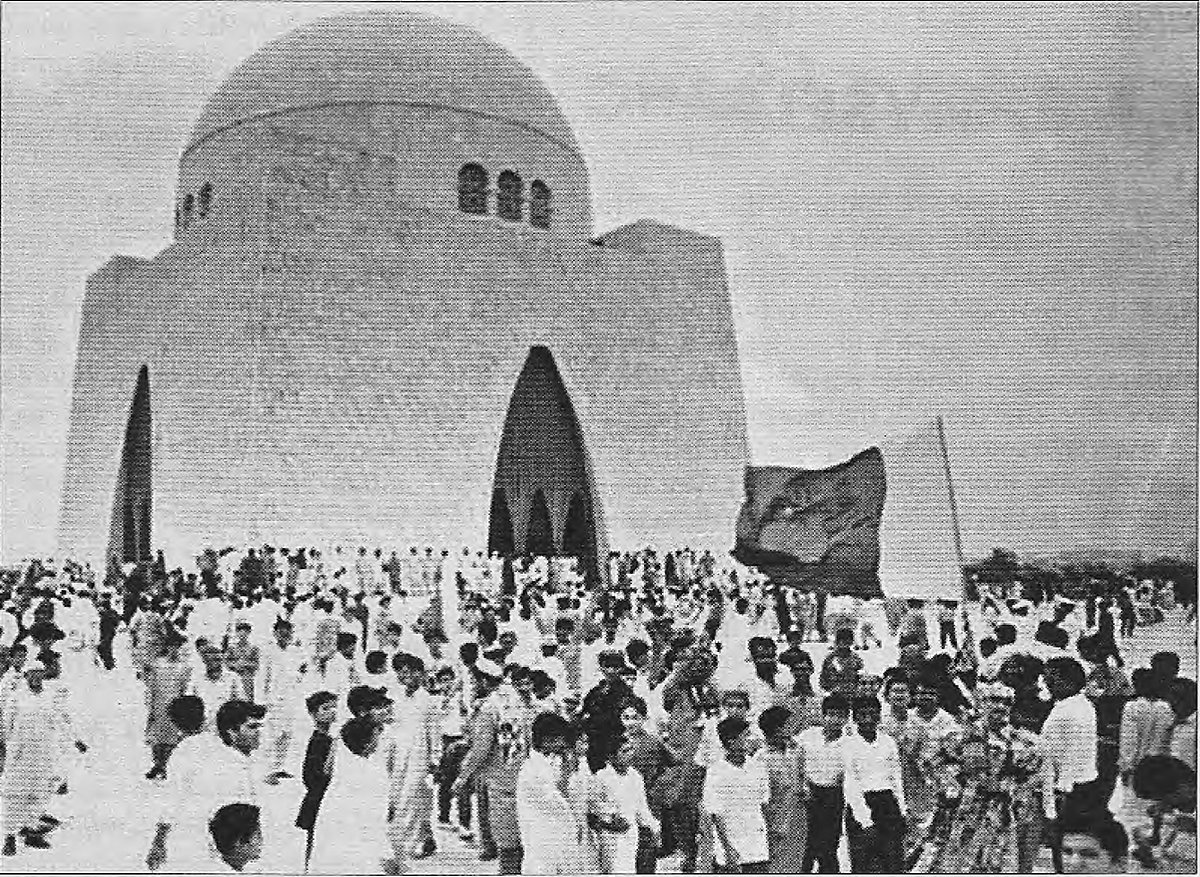
The Founder of Pakistan, Father of the Nation, the Great Leader, Quaid-e-Azam Muhammad Ali Jinnah (1876-1948) is today the sentinel of Pakistan´s Islamic ideology. His portraits are everywhere, from Parliament to the smallest police station, showing him in sherwani and his trademark cap, his features set in an expression of ideological censure.Jinnah´s party, the Pakistan Muslim League, is in power and it has no doubt that he would have approved of the process of Islamisation and the imposition of sharia. The Quaid-e-Azam´s entire career is today explained as given over to the struggle for the establishment of an Islamic state where only Muslims would be full citizens.
Jinnah has been harnessed to a version of Islamic ideology that was not his own. In order to maintain Jinnah in this ideological posture, the Pakistani state has had to modify many known details of the man´s life. Such as his beliefs, his family relationships, his eating habits, his religiosity, his attitude towards Partition and towards India, and his views on minority rights.
In India, Jinnah has been reviled as a malevolent, humourless, politically ambitious man who wrecked the dream of a united, secular India. Authors like H.M. Seervai have tried to put the record straight, but Jinnah-bash-ing continues in India, which has had an impact on how the larger world views the Quaid. Gandhi was Jinnah´s contemporary rival but it was young Nehru who was responsible for demonising him. Shortly before his death, Mountbatten called Jinnah "bastard" in his interview with Dominique Lappiere and Larry Collins while they were researching Freedom at Midnight. Attenborough´s film Gandhi has castigated Jinnah while deifying the Mahatma.