
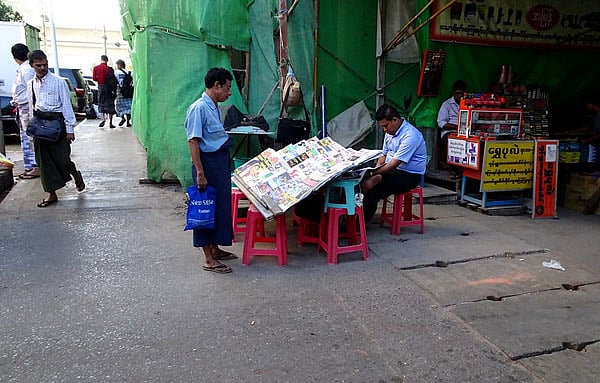
The economy was a strange beast. On the surface, Burma in the early 2010s looked to some like a new frontier market, emerging from long years of hibernation, and set to receive global capitalism with open arms. Scratch the surface and even the casual observer might realize that – unlike, say, Vietnam twenty years before – Burma was already enmeshed in its own strain of capitalism, more than a generation in the making, with markets stronger than state agencies, and a legion of shadowy businessmen keen to protect their turf. Dig deeper, and outsiders might see that just a few hours' drive from Rangoon or Mandalay were territories beyond any state control, inhabited by a patchwork of armies and armed groups, illegal and illicit trades, and a Chinese frontier over which even Beijing's sway was tenuous at best.
The Thein Sein government had moved fast and decisively to improve the economy. The results were plain to see. Inequalities, however, remained as deep as ever. And there was no real conversation about the future shape of the economy. To the extent that there was a vision, it was to move from the anarchic capitalism of the past two decades to a more garden-variety state capitalism, following other Asian examples and focusing on export-oriented industrialization.
And any genuine effort to restructure the economy faced monumental obstacles. Office-holders and cronies had fine-tuned venal relationships. Many stood ready to frustrate further change. State-owned firms, most suffering heavy losses, employed tens of thousands of poorly skilled and virtually idle workers. The army, through its own conglomerates and massive landholdings, still enjoyed a fat piece of the pie. Budgets were bloated and billions of dollars in public funds disappeared into the bureaucratic labyrinth. Few paid taxes, including on property. In 2012, two new land laws were passed, with the stated aim of rationalizing an extremely messy land tenure system; but depending on how the laws are implemented, they may well entrench a status quo that concentrates millions of acres in the hands of those with access to state power, leaving millions of people with nothing.
At the same time, the shadow of the country's illicit industries loomed ever larger. By 2015, the northern and eastern Shan Hills had become the global epicenter for the production of meth tablets, as well as the higher value crystal meth, or ice. Militia allied to the Burmese army were deeply involved. So, too, was the biggest rebel force, the United Wa State Army. Ice was exported to fast- expanding markets in Australia, New Zealand, and Japan, where an increasing number of housewives are among the new addicts. As with jade, no one knows the total value of the trade, though United Nations estimates run into the tens of billions of dollars a year.