
M G Abrol was presumably asleep in his house when, in the early hours of 21 March 1977, the noise of a telephone rang through the halls. The additional secretary in the Ministry of Finance might not have been surprised to hear the voice of his equivalent at the Ministry of Home Affairs, P P Nayyar, at 2.30 am in the morning. For the past twenty months, India had been under Emergency, with the prime minister's executive-rule filling the vacuum left by the suspension of democracy. It was a period replete with late-night calls and secret lists being compiled by bureaucrats for penalising dissenters, sometimes on the instructions of political functionaries, sometimes in sheer caprice.
Only, Nayyar had called to inform him that the Emergency had been withdrawn. Abrol recounted that fateful conversation in a 'Secret Note' penned on that day:
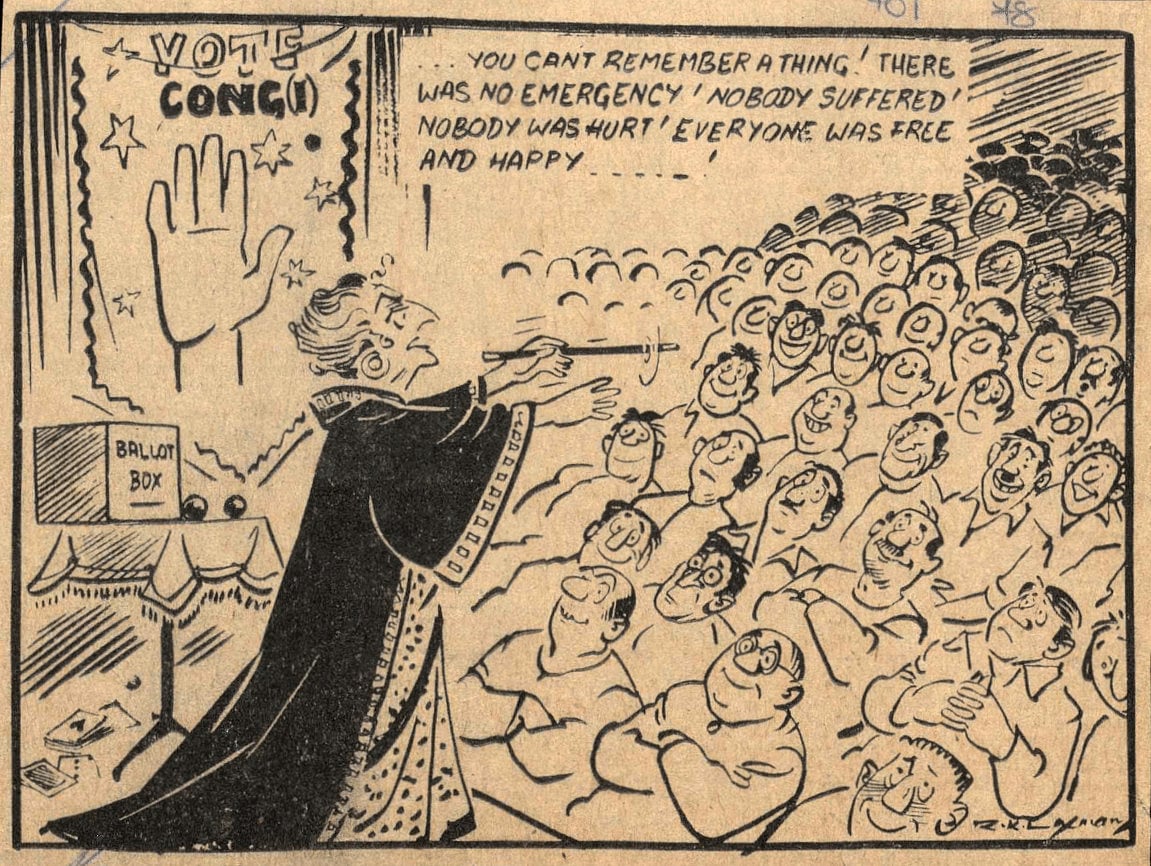
Just as it had come by way of midnight messengers in June 1975, the Emergency would now make its exit almost two years later in a cabinet meeting which began at 11.30 pm at 1 Safdarjung Road on the night of 20 March 1977. The meeting was held in the wake of perhaps the most defining electoral result in India's history (and if Pupul Jayakar's account is to be believed, a 'wake' pretty much summed up the mood). Against all odds, Prime Minister Indira Gandhi had just lost at the polls to a hastily-assembled opposition coalition, the most important members of which had only been out of jail for less than two whole months.
All too often, it has been this electoral result which is credited for spelling the end of the Emergency in India and the full restoration of the rule of law as provided under the Constitution. Perhaps, as is argued, the cabinet revoked the Emergency in its entirety feeling that there was no mandate to sustain the measures after the decisive loss at the polls.