
Since taking over as prime minister of Malaysia in 2009, Datuk Seri Najib Razak has been promoting a particular vision of nation-building, encapsulated in the catchy slogan '1Malaysia'. In an interview in 2010, the prime minister explained that he aims to strengthen Malaysian society by encouraging a spirit of tolerance that would gradually lead to the acceptance and, finally, celebration of Malaysia's significant cultural diversity. According to official publications, 1Malaysia seeks to strengthen the relationships and cooperation among the country's multi-ethnic peoples. While critics say that the concept merely re-packages old Malaysian 'moderate' values into a new public-relations tool for the Barisan Nasional, the ruling coalition, many others believe that if properly implemented, the campaign could be a step in the right direction. While a clear roadmap of how this pluralistic society – where ethnic identities are endemic and political – can achieve such an ideal has yet to emerge, Malaysia's experience is of interest to countries across South and Southeast Asia for its capacity to maintain a fragile ethnic balance and minimise ethnic conflict.
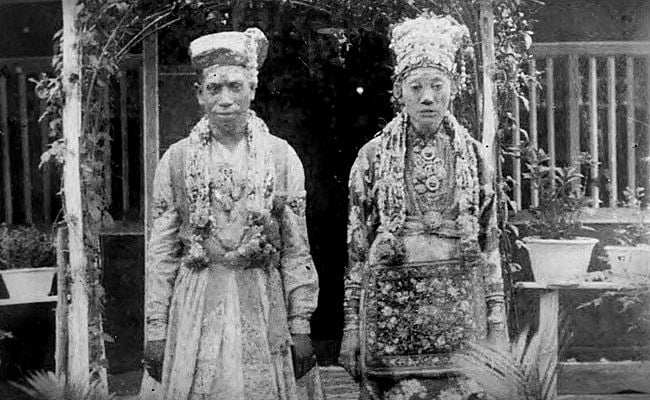
In Malaysia, it has been rare for hybrid identities to survive into the modern period. For economic expediency, the British divided the indigenous Malay, Indian and Chinese diasporas by occupation and therefore also by geographic location. In part, this was similar to the divide-and-conquer policies used by the British elsewhere in the colonies, including between the Hindu and Muslim communities in India. In Malaysia, the Indians were employed in the rubber estates and other plantations, the Chinese in the tin mines, while the Malays remained in agriculture and fishing. Inevitably, this resulted in a society deeply divided along ethnic lines.
Against this complicated background, the forefathers of Malayan independence confronted the daunting task of maintaining the fragile multi-ethnic balance within the framework of the Constitution of Malaya, as the country was called prior to independence (not including 'East' Malaysia, consisting of the Borneo states of Sabah and Sarawak). After the Japanese occupation from 1942 to 1945, Britain's overriding concern was to unite Malaya under one federation. Ironically but unsurprisingly, British efforts at crafting a constitution for an independent Malaya were hampered by the ethnic cleavages they themselves had created. As a consequence, the build-up to independence saw the growth of Malay nationalism and the emergence of three ethnically exclusive political parties: the dominant United Malays National Organization (UMNO), the Malayan Chinese Association (MCA) and the Malayan Indian Congress (MIC).
Though Malaya gained its independence from the British in 1957, the Federation of Malaysia only came into existence in 1963 with the amalgamation of Sabah and Sarawak as well as Singapore (which left the federation shortly thereafter). From the start, the political stability of multi-ethnic Malaysia was premised on the numerical majority and political primacy of the ethnic Malays, who together with the indigenous populations of Sabah and Sarawak were entitled to special constitutionally enshrined rights as bumiputeras – sons of the soil. At the same time, the Constitution guaranteed protection of the genuine and legitimate interests of the non-Malay communities. Since then, both at the federal and the state levels, Malaysian politics has been organised around ethnicity and race.