
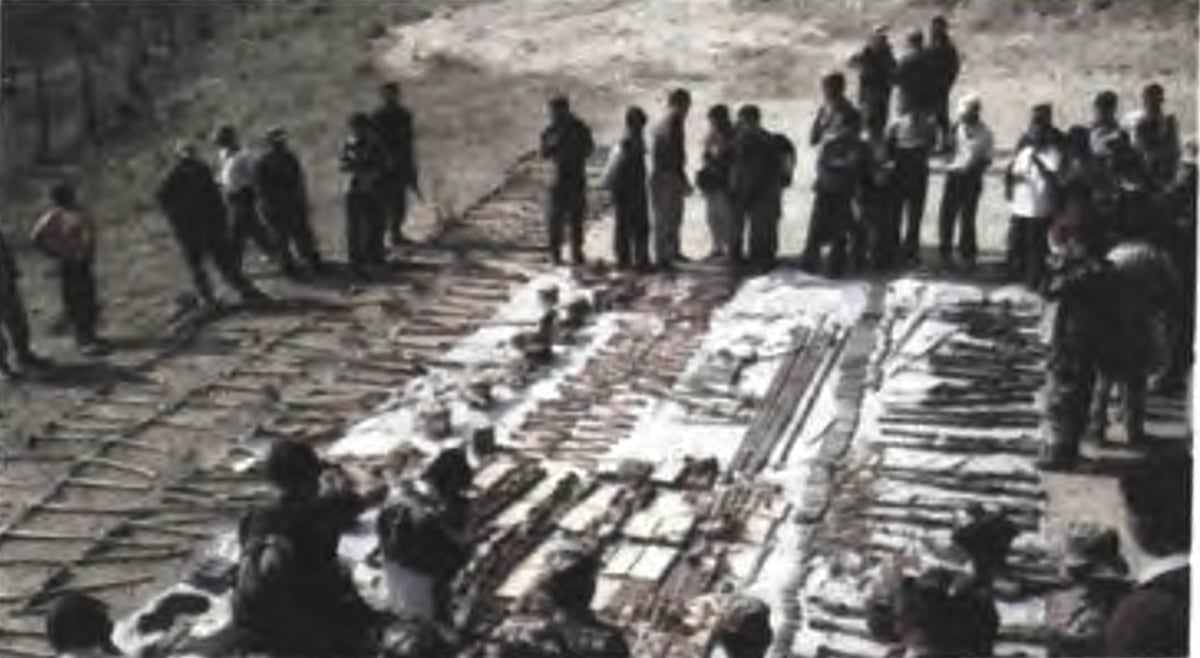
The 10 years of the Maoist conflict in Nepal, 1996-2006, cost just over 13,000 lives. About 8000 were killed by the security forces. Many of those who died were civilians, and some thousands were extra-judicially executed or 'disappeared' – again, the great majority by the security forces. An unquantifiable number of combatants were killed in battles and genuine encounters between the Royal Nepal Army (RNA) and the armed wing of the Maoists, the 'People's Liberation Army' (PLA). About 350 of these individuals were killed in two battles that took place in 2005: at Khara, on 7 April, and at Pili four months later, on 7 August. The battles are notable for their significant political consequences, as well as for the fact that the two commanders-in-chief were personally involved in the instigation of deeply flawed plans that led to humiliating disaster and significant loss of life. Both sides, therefore, have a continuing strong vested interest in drawing a veil over what happened during these battles, and why.
This analysis is based mainly on a study of readily available Maoist-produced videos, which cover both battles; and, in the case of Pili, by personal research that confirms and amplifies what is seen and heard on the videos. Tularam Pandey, a journalist with the Kathmandu Post, visited the Pili camp six days after the battle, and his reported accounts also tie in very closely with those from other sources.
This article first examines the battle at Khara. The PLA's first attack on the RNA base at Khara, in the mid-western Rukum District in May 2002, was repulsed with over 150 Maoists killed. It is hard to understand why the Maoist high command thought that it could succeed with another attack nearly three years later, knowing that the RNA had greatly strengthened the Khara fortifications. The video footage shows the base to be well sited on high ground, thus requiring any attacking force to fight uphill through minefields and elaborate barbed-wire obstacles, all capable of being covered by machine-gun fire. The fortifications also included a layout of well-prepared trenches and bunkers.
A conventional military assessment would have indicated that an attacking force would need a strong opening bombardment of artillery and mortars, perhaps supported by air strikes, to weaken the defences before assault forces could be launched with any chance of success. Even with such preparation, however, the attacking force itself would still need strong superiority of firepower in order to succeed. The Maoists enjoyed none of these advantages, and the lessons of previous failed attacks should have been clear to them. In November 2002, they had failed to overcome the strongly prepared RNA positions at Khalanga in Jumla District, a setback that the Maoists have recently acknowledged to have been a turning point in the war, and one that required a serious downscaling in their aspirations for overall military victory. In March 2004, the PLA likewise failed to overrun the RNA defences at Beni in west Nepal, and Khara was a much tougher objective.