
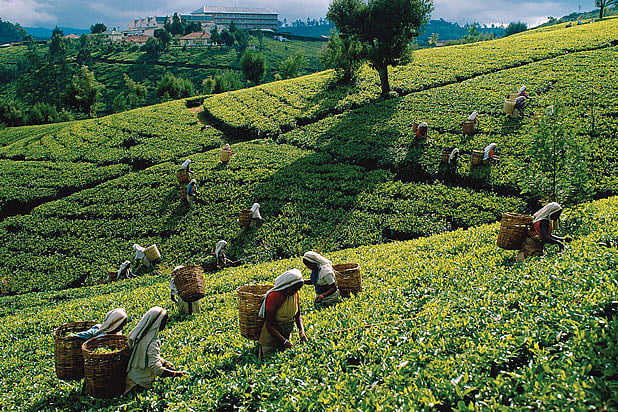
Historical, political and economic analysis of post-colonial Sri Lanka cannot avoid confronting the predicament of the Up-country Tamils, the community brought over as indentured labour by the British first to work on the country's coffee plantations and then its tea plantations in the 19th and early 20th centuries. From their harrowing journey to Ceylon in slave-like conditions, to the brutalities of estate work, to their disenfranchisement and statelessness after independence, to their displacement within Sri Lanka and part repatriation to India where they endured further torment, the Up-country Tamil narrative is integral to understanding the tragic predicament of modern-day Sri Lanka. Indeed, the building of a post-colonial society known for its social welfare developmental state depended on the exploitation of the very Up-country Tamils whom the state disenfranchised and silenced. Yet, the story of this community and their quandaries has remained largely under-documented.
This gap is filled in part by Daniel Bass' well-researched and carefully written work Everyday Ethnicity in Sri Lanka: Up-country Tamil identity politics. His work has emerged in Sri Lanka's post-war era, and one question that guides his anthropological account is whether this era will afford new political opportunities for this historically marginalised community. Bass' field research spans multiple visits to Sri Lanka and India between the late-1990s to the late-2000s, coinciding with some of the heaviest fighting during Sri Lanka's armed conflict. He narrates the history of this community and closely records their cultural practices, and his bibliography is an excellent record of works on the estates and the Up-country Tamils. Bass aptly describes how the disenfranchise-ment of the Up-country Tamils was one of the first symptoms of an emergent conflict eventually leading to the war that would ravage the country. Ultimately, he sees the post-war climate as one where reconciliation has not emerged and repression of minorities continues.
The Up-country Tamil predicament is a troubling one. After arriving in what was then Ceylon, Up-country Tamils worked on plantations that, for the greater part of the last century and a half, provided Sri Lanka with its main source of exports and foreign exchange. However, soon after Independence in 1948, Up-country Tamils were stripped of their citizenship, which prompted a difficult struggle for their political rights in the face of their already marginalised social and economic position. The Up-country Tamils' class position meant they suffered the daily humiliation, harassment and detention by the security forces as the war in the North and East spilled over with bombs and attacks into the Sinhala-dominated South.
Over the years, scholars have debated this community's particular identity. Are they different from the Tamils resident in Ceylon prior to their arrival? Are they Indian Tamils, as the census in Sri Lanka continues to characterise them? If so, how does one address their political identity given that they have lived in Sri Lanka for generations? Bass settles upon the term most people from the estates like to use for themselves: 'Up-country Tamils', a translation of 'Malaiyaka Tamils'. This distinct identity emerges from this community's oppression by both the British colonisers and the Sinhala elite, as well as their betrayal by the Jaffna Tamil elite. Not only did the then-leader of the Tamil Congress, G G Ponnambalam, shamefully join the Government even as this community was being disenfranchised, but subsequent Tamil leaderships continued to do little more than pay lip service to Up-country Tamil rights. Indeed, the Tamil demand for federalism, and later for a separate state in the north and east of Sri Lanka, could not accommodate the geographically distinct region of the central highlands, which is home to the Up-country Tamils. While class was a significant factor in their marginalisation, the Jaffna Tamils' contempt for this community was augmented by the Up-country Tamils' low caste position.