
"There is no doubt, of course, that those displaced persons who have come to settle in India are bound to have their citizenship. If the law is inadequate in this respect, the law should be changed."
– Jawaharlal Nehru in 'Refugees and Other Problems', Jawaharlal Nehru's Speeches, Vol 2
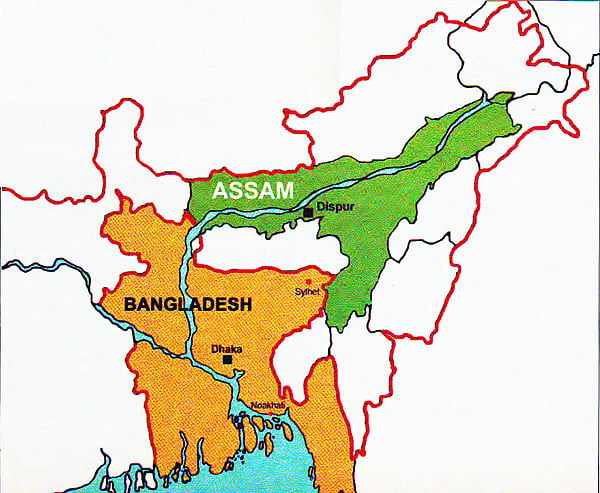
Ever since the time of Independence, the constant political refrain in this pivotal state of the Indian Northeast has been the 'inundation' it is said to be facing from East Bengali, later Bangladeshi, "illegal" migrants. It was this issue which fuelled the sons-of-soil Assam agitation of the late 1970s and early 1980s; and even today, no week passes without a politician making a speech, or a newspaper printing a report or editorial, about Bangladeshi in-migration. The fear of the Asamiya-speaking indigenous population is of being demographically, politically and culturally swamped by Muslims from Bangladesh.
It is a potent invitation to anxiety, and one which has been used to its fullest by the political elites of Assam. Not only has this matter of migrating Muslims from across the slack southern border been one of the defining themes of Assam politics, it is taken largely as a given by the academics and journalists in other parts of India and elsewhere.