
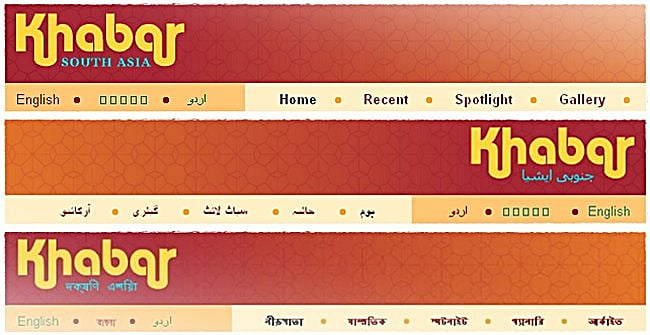
In December 2011, a new Southasiannews portal became available on the web – Khabar South Asia. This could have been a welcome development, given the decades-long campaign to promote Subcontinental regionalism as a means for socio-economic advancement. What was intriguing was the 'About Us' button, however, which let on that the portal is brought to you by the Pacific Command (PACOM) of the United States military.
There may be reason to take some satisfaction from this new arrival among those who have been working over the years to develop cross-border journalism in the region. That the multi-billion dollar machine of the US military-intelligence complex has decided on the same pathway must amount to something. This is as far as the satisfaction goes, however. Regionalism in Southasia should be an instinctive endeavour of the people of the region, and not something to be promoted or manipulated by the geo-strategic agenda of a world power.
It is inappropriate for a military behemoth to run a news-and-analysis portal aimed at the Southasian public, for it can only be a masquerade. The state-sponsorship makes the endeavour suspect, an attempt to tilt public opinion in the direction favoured by US strategists rather than provide an independent source of news and opinion.
The stated objective of the Khabar South Asia is to provide information 'on developments affecting the stability and security of the South Asia region', presenting news and articles 'from paid correspondents' around the Subcontinent. The narrow geo-strategic focus becomes clearer in the portal's mission statement of covering 'developments that hinder both terrorist activity and support for violent extremism'.