
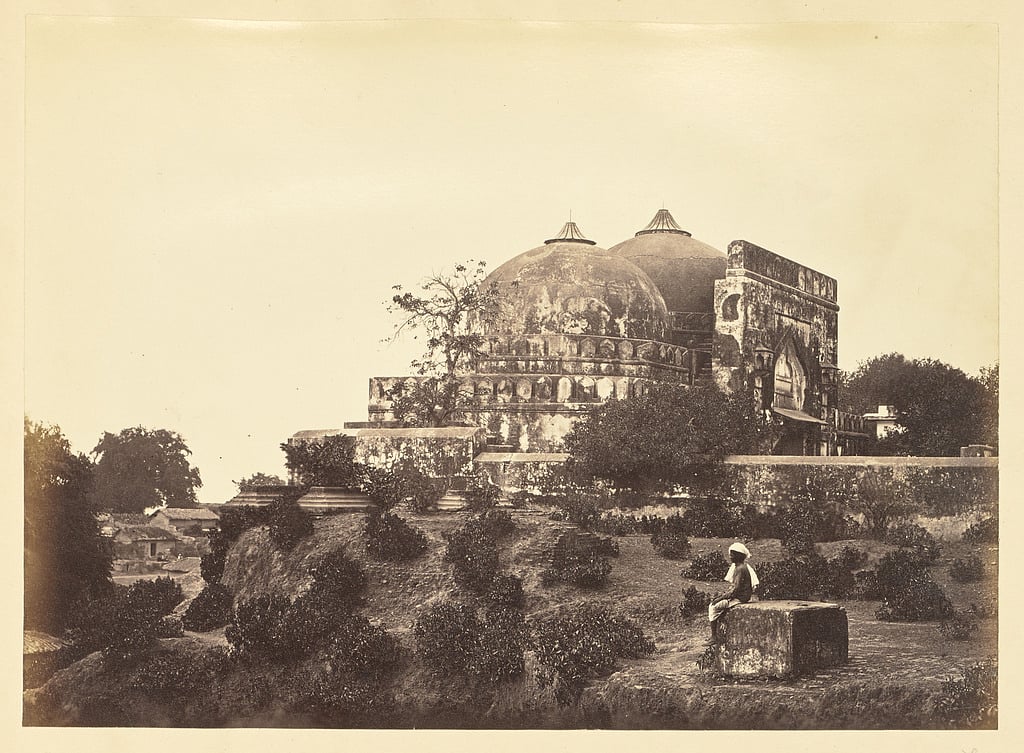
On 9 November 2019, the Supreme Court of India held that the disputed Ayodhya site should be handed over to the Hindus in its entirety and directed the central government to construct a Ram temple on the site. The decision comes nearly 27 years after the destruction of the Babri Masjid on 6 December 1992 by karsevaks, and more than a century of contestation.
Supreme Court verdict
The findings of the apex court, in the appeals preferred by the parties, are categorical and unequivocal: Muslims were dispossessed of their place of worship "not through any lawful authority" in the intervening night between 22 and 23 December 1949, when the Babri Masjid was desecrated through the placing of idols; and bringing down the Babri Masjid on 6 December 1992 was "a calculated act of destroying a place of public worship" that amounted to "an egregious violation of the rule of law".
However, in stark contrast to the Allahabad High Court judgment in 2010, which accepted joint ownership and decreed dividing the property, the Supreme Court observed that the Hindus never accepted the division, and the complex as a whole was of religious significance. Thus, the apex court judgment declares the disputed property as one composite unit. To reach this position, the court accepted the evidence of witnesses, stating that Hindu pilgrims continued to offer prayers standing along the railing of the outer courtyard, looking towards the sanctum sanctorum, even after the British set up a grilled wall in 1857. Construction of the wall had not obliterated their belief that the inner sanctum or garbh-grih (womb or room where the child is delivered), purportedly located below the central dome of the Babri Masjid was the birthplace of Lord Ram. The court did not consider whether the belief was justified, holding that this was beyond its jurisdiction as a secular institution.