
The upsurge of jihad among Muslims around the world has forced intellectual comparisons with 'terrorist' movements in Europe. Western scholars have found similarities between the policies of al-Qaeda today, and both those of the anarchist movement before World War I and the radical leftist movements of the second half of the 20th century in Europe. There is even an 'intellectual content' alluded to in al-Qaeda's ideological archive, along similar lines as the political justification given by the anarchists as they planned their assassinations. The anarchists accepted the 'collateral damage' of the loss of innocent lives because the victims belonged to those "satisfied with the established order, all the accomplices and employees of Property and the State", in the words of Emile Henry, the French anarchist who in 1894 planted a bomb in the Gare St Lazare, in Paris. For his part, Osama bin Laden has also justified the killing of innocent people in the attacks of 11 September 2001, saying: "They had chosen their government by way of their own free will, a choice which stems from their agreement to its policies."
The creation of disorder is the most lethal weapon available against those who wish to arrange the world into a pattern commanding global consent. The agents of Islamic disorder adopt chaos as their objective because their voice is either not backed by those they wish to represent, or because the 'enemy' is simply too strong (due to global support) to tackle head-on. The idea is to break the order that has been created. In the first phase, this is to be replaced with disorder; later, intellectual solutions – provided by thinkers that al-Qaeda has adopted – are to be applied, in order to create a new order. Once again, the philosophers of al-Qaeda posit an alternative utopia, just as such figures such as Pierre-Joseph Proudhon and Mikhail Bakunin did for anarchism. The only difference in this case was that Europe never put its faith in an anarchist creed, while a surprising number of Muslims throughout the world believe, albeit to varying degrees, in the Islamic vision put forward by the philosophers of al-Qaeda.
One reason why the Islamic utopia – based on the negation of the modern state and liberal democracy – is alive and well is that it cannot be criticised. In Europe, the 'disorder' of the city-state was rebuked in the mental republic posited by Plato, a critique from which the West benefited, as it was able to remove some of the flaws of democracy. But the 'disorder' of the historical city-state of Medina cannot be criticised due to its prophetic reference and its confirmation through the divine revelation that the Muslims call wahi. It is from the city-state of the Prophet Muhammad and its tribal template that the Muslims of today extrapolate their ideal state. Muslims reject the modern nation state and its separation of religion and politics, and replace it with a global supranational umma, a concept that obliterates frontiers and joins disparate Muslim communities into a transnational caliphate. Since Medina was based on strict tribal law as laid down in the unchangeable Quran, the umma must be 'retribalised' for the realisation of an Islamic utopia.
High-value targets
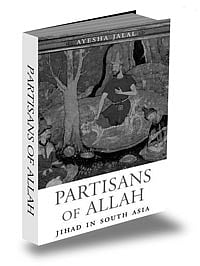
So arises the most crucial part of this process – and that which justifies historian Ayesha Jalal's writing of the new Partisans of Allah. Muslim thinkers began to conceive the modern state vis-à-vis the Quran during the 18th century, and quickly came up against the obstacles of modern 'impurities' that were rampant in their societies. Many of these were put down to the reinterpretations that had been imposed on the Quran by the local jurists of the various schools of Islam.