
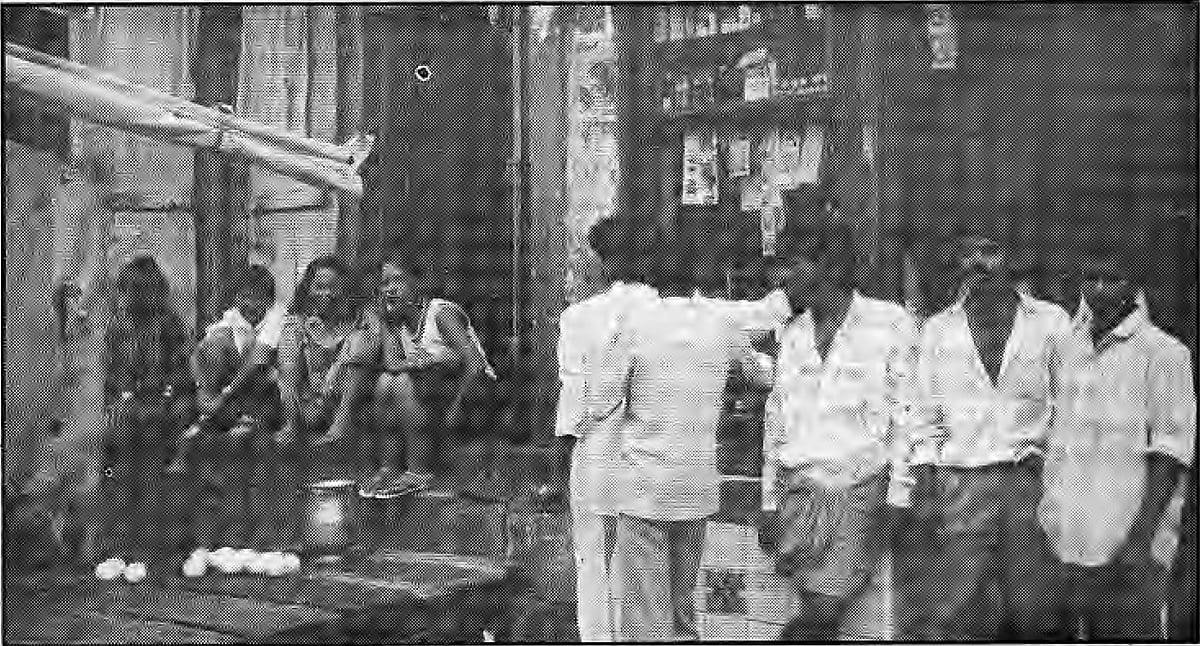
When the average Nepali considers prostitution, it is most likely in the context of young village girls being lured or forcibly abducted under false pretences to India. For the more aware, prostitution looms large as the AIDS conduit which will directly transfer the dreaded disease from the brothels of Bombay to the Nepali hinterland. Very few choose to question or consider the reality behind these assumptions, or the alarmingly high numbers involved in the sex industry.
Part of the problem is that there is extreme paucity of data regarding prostitution. Most of the present theories and opinions are derived from second-hand heresay and not from empirical research. The information gap also probably derives from middle-class mores of Kathmandu society. Even serious researchers tend to shy away from discussion of sex in public or private life. In the end, the phenomenon of prostitution is ignored, or sensationalised from time to time.
Because there is a reluctance to personalise prostitution, the basic premise as to why prostitution and trafficking exist in Nepal is overlooked. Prostitution fills a need in society. It is a two-way process involving women (as sex workers) and men from all strata of society. It is not to be forgotten that like any other area of the economy, the sex industry is the result of supply fulfilling demand. Dr. Pushpa Bhatt, an STD (Sexually Transmitted Diseases) specialist of HMG's AIDS Control Programme in Kathmandu, says the prostitute is often used as a scapegoat who takes the blame for larger problems in the area of health, religion and social norms. "Very rarely are men looked upon as fuelling prostitution; after all, prostitutes need clients, but the men are rarely blamed."