
| Image: Bilash Rai |
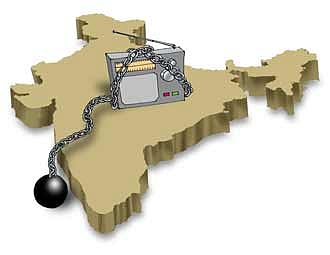
After India's first, rather grudging, opening of the airwaves for community use in December 2002, it took four years of intense effort by advocacy groups to obtain a policy even halfway meaningful. But when the fine print of the fresh set of guidelines on community radio (CR) services – issued last December – was studied, it became clear that the eligibility criteria laid down in the policy left significant room for ingress by bodies that have little to do with the purported aims of community radio. Worse still, the restraints that had been placed on those with the necessary credentials could, conceivably, entirely defeat the intent of CR. Viewed in substantive terms, the official announcement achieved little more than meeting the formal requirement of being a policy. This should count a dubious gain when viewed against other experiences in the neighbourhood – particularly in Nepal, but also to some extent in Sri Lanka – where community broadcasting has contributed significantly to the quality of the public discourse, despite lacking the benediction of official policy.
The constitutional position in India, as established in the Supreme Court judgment in the 1995 Cricket Association of Bengal v the Ministry of Information & Broadcasting, is very clear: the airwaves belong to the public, and the government has no enduring rights of ownership, even if it has for historical reasons established a custodial monopoly over the broadcast spectrum. This judgment also stipulates that the allocation of rights over the spectrum needs to be done by an independent group that is attuned to, in some manner, the public interest.