
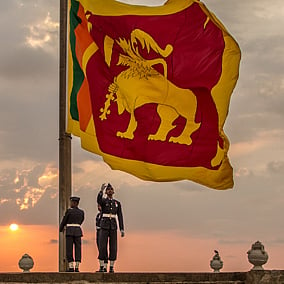
Sri Lanka is a democratic success story at a time when success stories are rare and failure is the norm. But it is easy for Lankans to lose sight of that fact as their attention gets mired in everyday issues – soaring prices, crime rates, venality of politicians. This is not helped by news from another continent about the less salubrious fate of another people, providing a glimpse of how much worse things could have been: such as the presidential investiture of Uganda's Yoweri Museveni on 12 May 2016.
The inauguration made news across the world because of the controversial nature of Museveni's victory and the subsequent wave of repression. It made news in Sri Lanka because one of the honoured attendees was the country's former president, Mahinda Rajapaksa. There was no invitation to the government of Sri Lanka but Rajapaksa was invited by Uganda's foreign affairs minister.
Museveni has been in power uninterruptedly since 1986, a leading luminary of the leaders-for-life club to which Rajapaksa too had hoped to belong. That hope was shattered by the electorate twice, in January and August 2015. Notwithstanding those rejections, Rajapaksa remains defiant and determined, intent on regaining power, making no secret of his intent. The former president's obsessive desire to be the next president is rapidly becoming the driving-force in Lankan politics.
Path to Return