
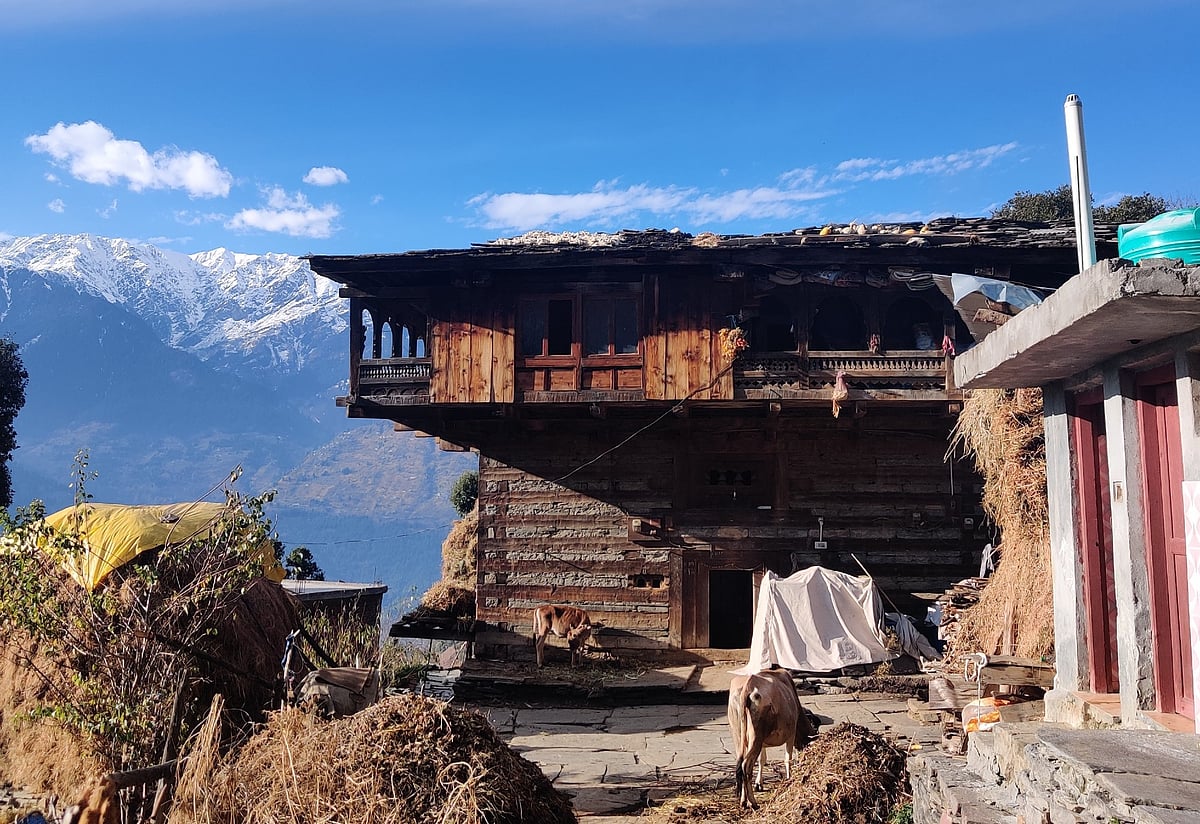
Despite everything, Naggar is still beautiful. For now.
Located more or less in the middle of Kullu Valley, Naggar is an old, regionally important village in Himachal Pradesh. Once the capital of the Kullu kings, Naggar's ancient stone temples and exquisite kath kuni (traditional Himachali wood and stone) houses are set against an emerald forest topped by rugged, snow-capped peaks. Interrupting this idyllic scene, a line of multi-storey hotels jostles for space along the village's arterial road. Everywhere, steel rods stick out of flat-roofed houses – promises for the future. Conspicuous in this rapidly transforming, increasingly incongruous rural fabric, Naggar's older structures are besieged, beleaguered bastions of beauty in a place that is losing it fast.
Bhrigu Acharya grew up in one such structure – one of the oldest kath kuni houses in Naggar – no less than 500-years-old according to local legend. Acharya House, as he calls it today, is imbued with personal and community history; a carved wooden mandapa used for winter weddings once held pride of place on the first floor. The Acharya family went through difficult times, however, and the house was past its glory by the time Acharya was born. As he grew up, it slipped deeper and deeper into disrepair. The day the roof leaked rainwater, Acharya realised his childhood home was no longer habitable. Desperate for a safe place for his family, he took a loan from a friend and built a concrete house right next to his ancestral one.
That is where he lives today.